Colorado asks more of the birder than most states. Its signature species don't live in the same place, and they don't cooperate at the same time of year. To see the full range of what Colorado offers, you need to cover three separate ecosystems: alpine tundra above treeline, reservoir wetlands on the Front Range plains, and the shortgrass prairie that stretches east toward Nebraska. No single trail gives you all three.
This guide does. It covers Rocky Mountain National Park for high-elevation specialists, Barr Lake State Park for one of the richest wetland bird counts in the state, and Pawnee National Grassland for prairie species that exist nowhere else in the region. Together they span nearly a mile of elevation and three completely different bird communities.
Colorado's total state bird list exceeds 500 species. The three sites in this guide collectively account for more than 400 of them.
Why Colorado Is a World-Class Birding Destination
Colorado sits at the intersection of the Rocky Mountain West and the Great Plains. The result is a state where the same afternoon drive can take you from alpine tundra at 12,000 feet to open grassland at 4,500 feet. Each zone produces a completely different suite of species. The birds of the tundra, the birds of the shortgrass prairie, and the wetland species that congregate on the Front Range reservoirs share almost no overlap.
The Colorado Birding Trail identifies more than 200 designated birding sites across the state. The three in this guide are among the most productive in terms of total species count. eBird shows the state list climbing toward 510 recorded species, and unlike many states, Colorado's best birding requires no special access or long drives into wilderness. Rocky Mountain National Park is two hours from Denver. Barr Lake is 45 minutes. Pawnee Grassland is 90 minutes.
When to Go: Colorado Birding by Season
🌸 Spring (Apr–May)
Migration peaks on the Front Range in late April and May. Barr Lake is at its most productive as waterfowl and shorebirds move through. Pawnee Grassland specialties like Long-billed Curlew and Lark Bunting arrive in May. Snow still closes high-elevation roads in Rocky Mountain National Park until late May.
☀️ Summer (Jun–Aug)
Peak season for high-elevation birding in Rocky Mountain National Park. Trail Ridge Road is fully open, giving access to White-tailed Ptarmigan, Brown-capped Rosy-Finch, and American Pipit. Pawnee Grassland is excellent for nesting prairie birds including Lark Bunting, Burrowing Owl, and Mountain Plover.
🍂 Fall (Sep–Oct)
Shorebird migration at Barr Lake peaks in August and September. Hawk migration along the Front Range in October. Pawnee Grassland longspur flocks build through October. Early snows can push high-elevation birds down, bringing rosy-finches to lower elevations by late October.
❄️ Winter (Nov–Mar)
Rocky Mountain National Park offers winter specialties including rosy-finches at lower elevations and Barred Owl in the montane forest. Barr Lake hosts wintering Bald Eagles and waterfowl. Pawnee Grassland birding slows but Rough-legged Hawk and Short-eared Owl are possible on winter drives.
Trail 1: Bear Lake Loop, Rocky Mountain National Park
Distance: 0.7 miles loop | Difficulty: Easy | AllTrails Rating: 4.7/5 (3,500+ reviews) | eBird Hotspot L388025
Rocky Mountain National Park holds 270+ recorded species across a dramatic elevational range. The Bear Lake area, at 9,475 feet, is the park's most accessible and most productive starting point for birding. A free park shuttle runs from the Bear Lake Road corridor, eliminating parking pressure, and the 0.7-mile Bear Lake Loop gives you immediate access to subalpine forest species that exist nowhere at lower elevations.
The star of the Bear Lake area is the Clark's Nutcracker: a large, silver-gray corvid with black wings and a loud, raspy call that you will hear before you see it. Clark's Nutcrackers are ecologically essential to the subalpine forest, caching tens of thousands of whitebark pine seeds each fall and retrieving most of them through winter. The ones they miss become the next generation of pines. They are bold, inquisitive, and abundant at Bear Lake year-round.
The subalpine forest around the lake also produces Steller's Jay, Mountain Chickadee, Red-breasted Nuthatch, Williamson's Sapsucker, and the much-sought American Three-toed Woodpecker. The American Dipper is reliably found on Glacier Creek below the lake: North America's only aquatic songbird, pumping its body up and down while walking underwater to feed on invertebrates.
For alpine tundra species, Trail Ridge Road (open late May through October) is the key addition. The road crests at 12,183 feet, the highest continuous paved road in North America, and passes through miles of open tundra. Pull-outs at Rock Cut (12,110 ft) and near the Lava Cliffs are the most reliable spots for White-tailed Ptarmigan: North America's smallest grouse, camouflaged perfectly against rock and lichen in summer, pure white in winter. Brown-capped Rosy-Finch — found only in the Southern Rockies above treeline — and American Pipit are also regular on the tundra. No hiking required: the birds are often visible from the road.
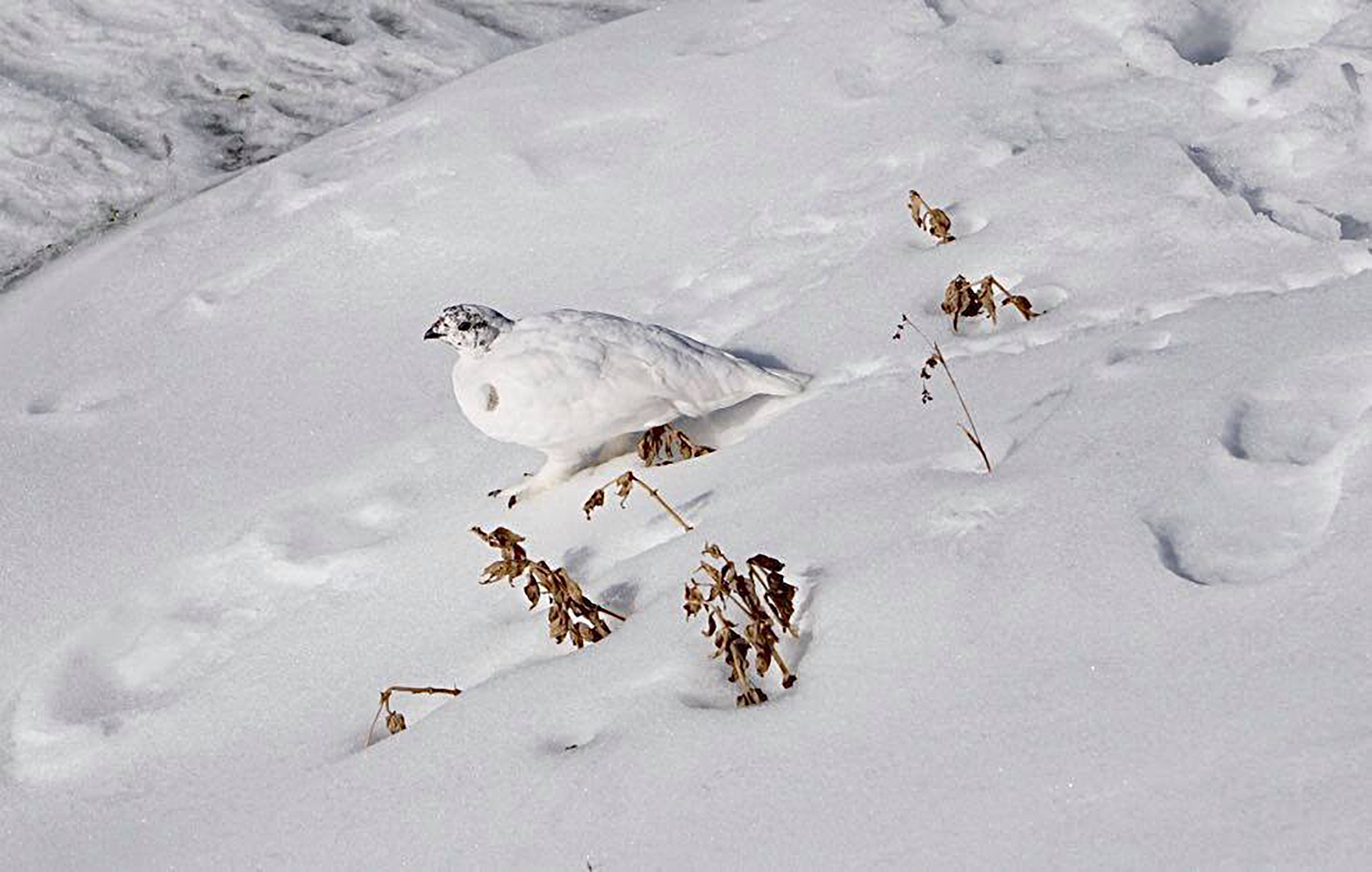
White-tailed Ptarmigan in winter plumage. Found above treeline along Trail Ridge Road in Rocky Mountain National Park. Photo: Cathy Cook / Public Domain — USFWS
The Moraine Park area (eBird: L1741281), a broad meadow at 8,160 feet, adds a completely different set of species. Broad-tailed Hummingbird is abundant from May through August, the male's wings producing a distinctive metallic trill in flight. Sandhill Crane is occasionally seen in the meadow. MacGillivray's Warbler and Wilson's Warbler breed in the willow thickets along Cub Creek.
Practical notes: An entrance fee or America the Beautiful Pass is required. The Bear Lake shuttle runs from the Park and Ride lot on Bear Lake Road from late May through mid-October. In winter, Bear Lake Road is accessible by car and offers snowshoe birding. Bring layers: temperatures at elevation can drop 30 degrees from the valley floor. Arrive before 9am for the best birding and lightest crowds.
Best months: June, July, August (alpine); May, September (migration)
Trail 2: Barr Lake State Park, Nature Center to Birding Observatory
Distance: 3.2 miles out-and-back | Difficulty: Easy | AllTrails Rating: 4.4/5 | eBird Hotspot L223018 (371+ species)
Barr Lake State Park sits 30 miles northeast of Denver at 5,100 feet elevation, and its species count of 371+ is one of the highest recorded at any single Colorado site. The park is a designated Important Bird Area. What makes Barr Lake remarkable is not any single species but the scale and diversity of the waterbird community that uses this Front Range reservoir.
The 3.2-mile out-and-back trail from the Nature Center to the Birding Observatory is the most productive route in the park. The flat, easy path runs along the southern shore through cottonwood forest and out across the lake via a boardwalk and gazebo that extends into the water directly adjacent to the main rookery.
The rookery is the centerpiece: more than 200 active nests used by Great Blue Heron, Great Egret, Double-crested Cormorant, and Black-crowned Night-Heron all nesting together in the dead cottonwoods at the lake's south end. The observatory gazebo puts you close enough to watch nest exchanges and hear the colony noise. A resident pair of Bald Eagles nests in a large cottonwood near the south shore and is visible year-round.
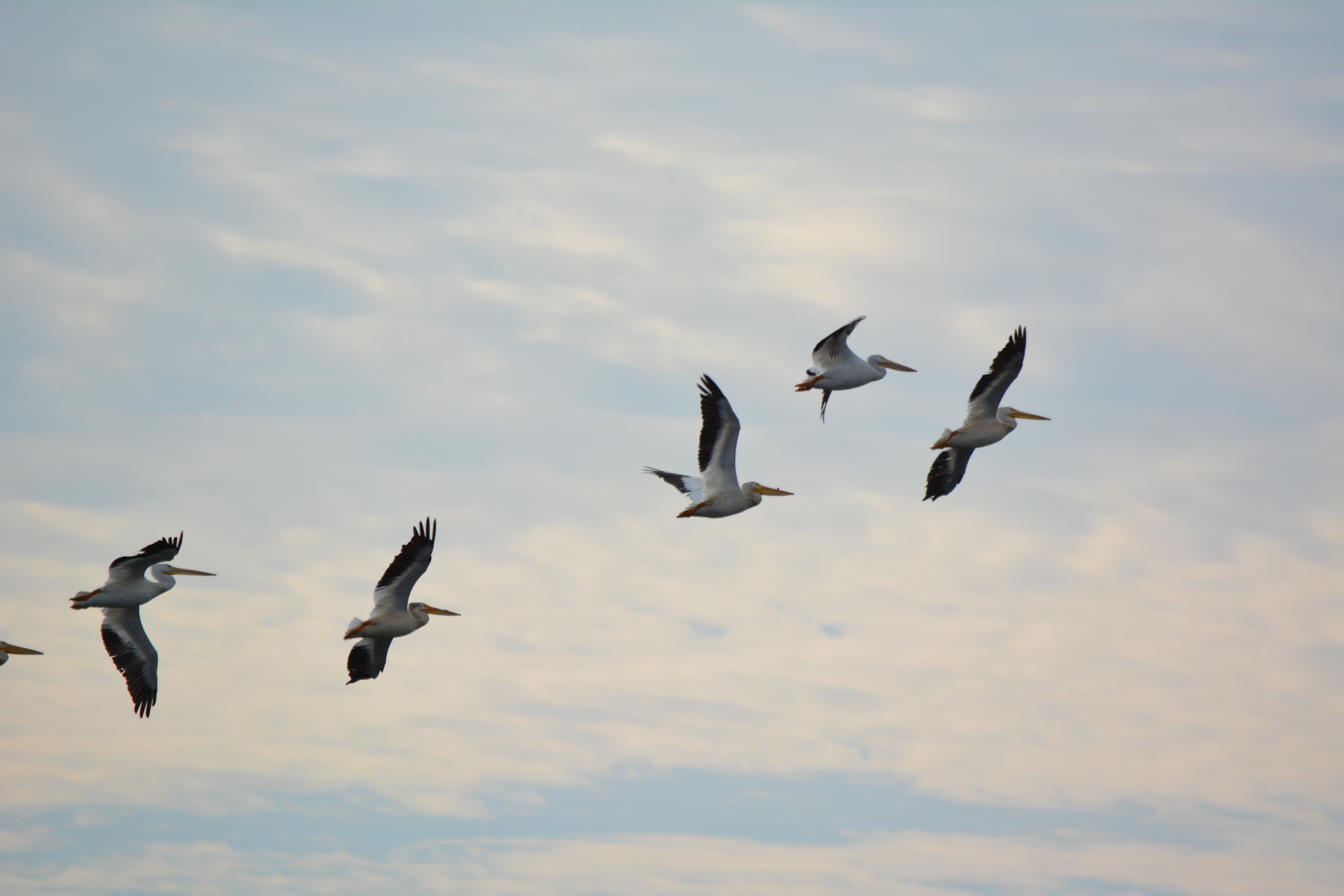
American White Pelicans in flight. Barr Lake hosts a substantial pelican population alongside 370+ other species. Photo: Katie Goodwin/USFWS / Public Domain — USFWS
American White Pelican is present from spring through fall, often in large flocks visible from the boardwalk. In migration, the species diversity peaks dramatically: Eared Grebe, Western Grebe, and Clark's Grebe gather on the open water. Long-billed Dowitcher, American Avocet, and a variety of sandpipers work the exposed mudflats during migration drawdowns. Breeding records from the park include Sora, Virginia Rail, Marsh Wren, and Yellow-headed Blackbird in the cattail marsh at the lake's east end.
The cottonwood corridor along the trail is excellent for migrant warblers in May and September: Yellow, Yellow-rumped, Orange-crowned, and MacGillivray's Warblers, along with Bullock's Oriole and Western Tanager. This is also one of the most reliable Front Range sites for Osprey, which nest at the lake and fish the shallows throughout the warmer months.
Practical notes: A small entrance fee is charged at the park gate. The trail is paved and fully accessible from the Nature Center to the boardwalk area. Restrooms and parking at the trailhead. The park opens at sunrise, and early morning is best for the rookery. A spotting scope significantly improves the view across the open water.
Best months: March, April, May (migration and breeding); August, September (shorebirds and fall migration)
Trail 3: Pawnee National Grassland Birding Tour
Distance: 36-mile self-guided driving tour | Difficulty: Easy | eBird Hotspot L754760 (300+ species)
Pawnee National Grassland, 35 miles east of Fort Collins, is one of the premier grassland birding destinations in North America. The shortgrass prairie here produces species that simply do not exist in the mountain or wetland environments of the other two sites. For any birder who wants the full Colorado experience, Pawnee is the essential third stop.
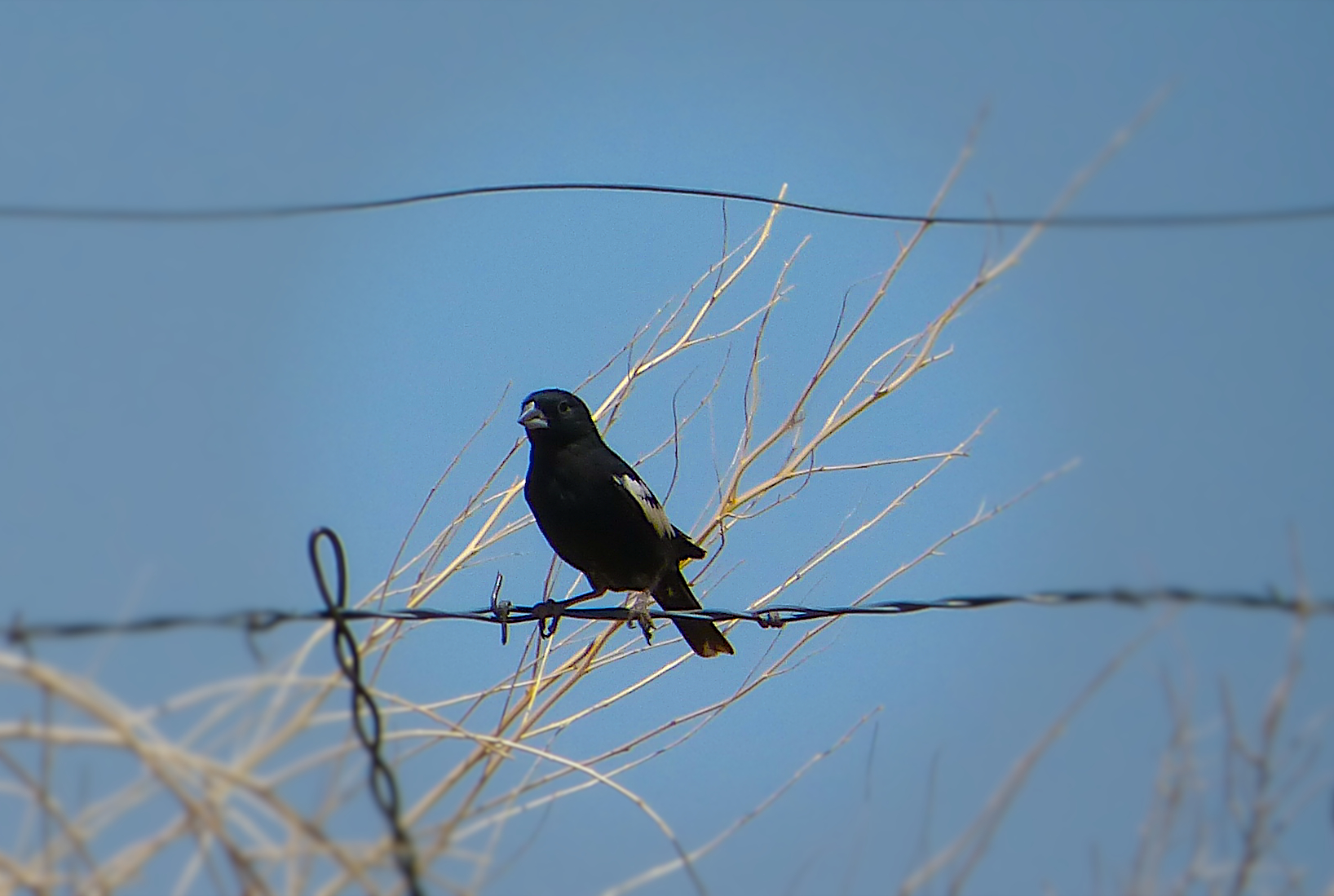
The most celebrated bird on the Pawnee list is the Lark Bunting: Colorado's state bird, a striking black and white songbird with a large white wing patch that transforms open grassland into a spectacle when breeding males perform aerial song flights in May and June. Hundreds of Lark Buntings can be visible simultaneously from the main county roads through the grassland. They are unmistakable, and nowhere in the country is the experience as reliable as at Pawnee.
The secondary targets require more patience but reward it: Mountain Plover is a subtly beautiful shorebird that breeds exclusively in dry upland grassland (not near water, despite the name) and is a conservation priority species with a declining population. The Burrowing Owl nests in prairie dog towns throughout the grassland from April through August. Long, low to the ground, and surprisingly unafraid of vehicles, they are one of the most engaging birds in the region. Ferruginous Hawk, North America's largest buteo, hunts the open prairie. Long-billed Curlew arrives in March and nests in the grassland through July, its improbably long decurved bill unmistakable in flight.
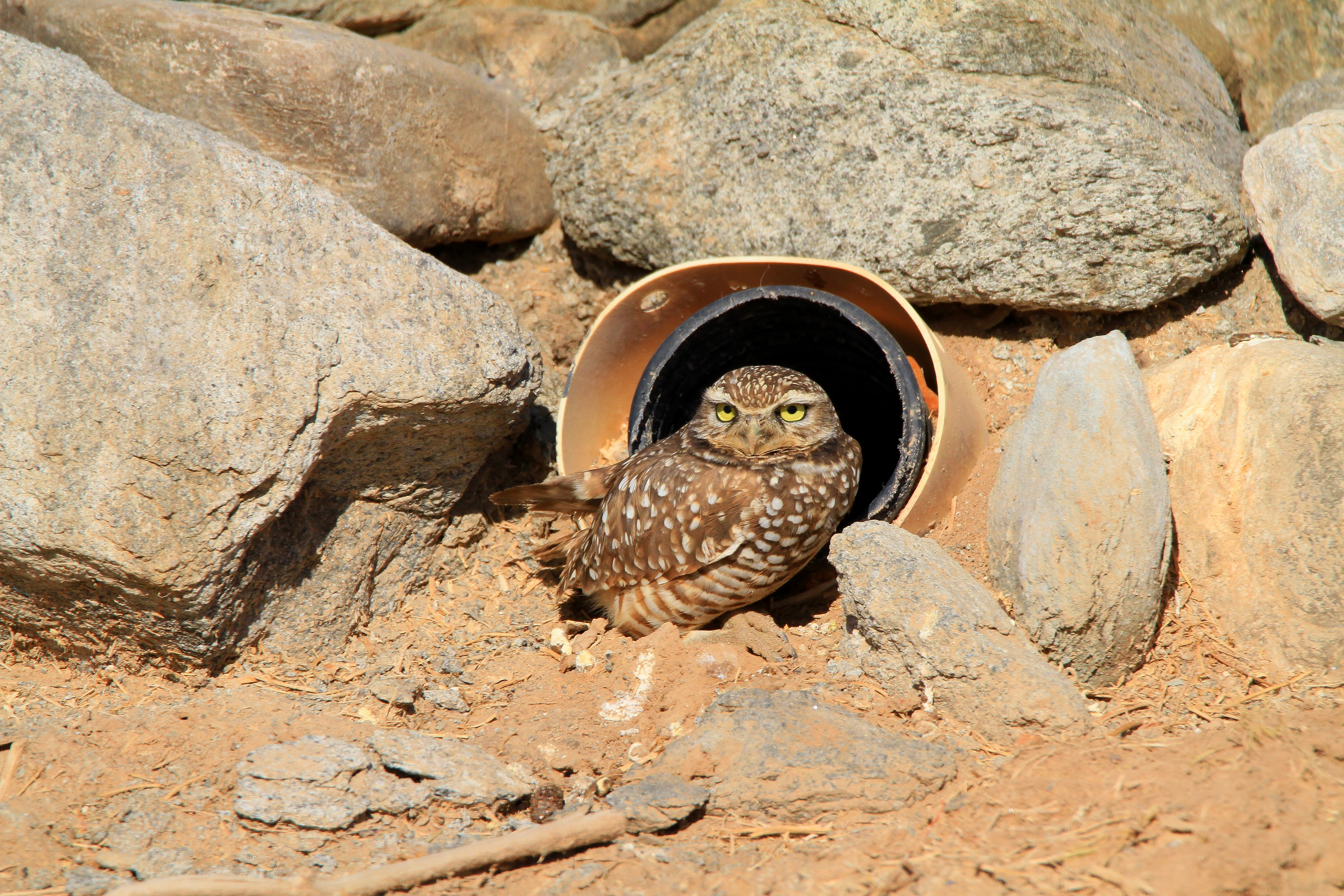
Burrowing Owl at its burrow entrance. Pawnee National Grassland is one of the most reliable sites in Colorado for this species. Photo: John Magera/USFWS / Public Domain — USFWS
The best birding at Pawnee is done from your vehicle, driving slowly along the county roads through the grassland. The Crow Valley Recreation Area near Briggsdale has a short walking trail (the Birdwalk Trail) through riparian habitat that adds different species: Red-headed Woodpecker, Yellow Warbler, Orchard Oriole, and during migration a variety of warblers and sparrows unlikely to be found on the open prairie. The Pawnee Buttes, visible from miles away as prominent landmarks rising from the flat grassland, mark the eastern section of the grassland where Mountain Plover is most reliably encountered.
The Thick-billed Longspur (formerly McCown's Longspur) and Chestnut-collared Longspur both breed at Pawnee, and mixed flocks of hundreds are possible in fall migration. Horned Lark is everywhere year-round. In winter, Rough-legged Hawk arrives from the Arctic and Short-eared Owl hunts at dusk over the grassland.
Practical notes: No entrance fee for Pawnee National Grassland. A high-clearance vehicle is recommended for the two-track county roads, though a standard car can navigate most of the paved and graded routes. Download a map from the Arapaho and Roosevelt National Forests website before arrival as cell service is unreliable. Crow Valley Campground near Briggsdale is the closest overnight option. May through July is peak season for breeding prairie birds.
Best months: May, June, July (breeding); September, October (longspur migration)
Signature Species of the Colorado Rockies
🦜 Birds You'll Likely See
Planning Your Trip
Getting there: Rocky Mountain National Park is 75 miles northwest of Denver via US-36 through Boulder. The Bear Lake Road corridor requires a timed entry permit during peak summer months (late May through mid-October) on weekends and holidays — reserve at recreation.gov well in advance or use the free shuttle. Barr Lake State Park is 30 miles northeast of Denver off I-76 at Exit 22. Pawnee National Grassland is reached via US-85 north from Greeley to Briggsdale.
What to bring: A spotting scope is valuable at both Barr Lake (for open-water species) and Pawnee Grassland (for distant raptors). Binoculars with 8x or 10x magnification are the minimum. At Rocky Mountain National Park above treeline, temperatures can drop below freezing even in July. Wind is constant on Trail Ridge Road. Layers, a rain jacket, and sun protection are all essential regardless of the weather at the trailhead.
eBird resources: Rocky Mountain National Park eBird shows recent sightings park-wide. Targeted hotspots: Bear Lake area (L388025), Moraine Park Visitor Center (L1741281), Barr Lake (L223018), Pawnee Buttes (L754760).
Trail Ridge Road timing: The road typically opens in late May and closes in October, but exact dates depend on snowpack and are not announced in advance. Check the Rocky Mountain National Park road status page before your trip. The Alpine Visitor Center (11,796 ft) opens when the road does and is the most convenient high-elevation birding stop: pull in, step outside, and scan the tundra from the parking lot.
Frequently Asked Questions
What is the best time to go birding in Rocky Mountain National Park? June through August is the primary window. Trail Ridge Road is fully open, the tundra is accessible, and breeding activity peaks in the subalpine forest. June is also excellent for Broad-tailed Hummingbird, Williamson's Sapsucker, and mountain warblers. The park is busy in summer, so early mornings and weekdays offer better birding conditions.
Where is the best place to see White-tailed Ptarmigan in Colorado? Trail Ridge Road in Rocky Mountain National Park is the most accessible site. The Rock Cut parking area (12,110 ft) and the short tundra walk near the Lava Cliffs stop are the most reliable. Ptarmigan blend almost perfectly into their surroundings, so look for movement and for the bright red eyebrow stripe of breeding males. A spotting scope helps scan the talus slopes.
What birds can I see at Barr Lake State Park? Barr Lake has recorded 371+ species: nesting Bald Eagles, American White Pelicans, a Great Blue Heron and cormorant rookery, Eared and Western Grebes, and large numbers of migrant waterfowl and shorebirds. Spring (March through May) and fall (August through October) are the most productive periods for diversity.
What grassland birds can I find at Pawnee National Grassland? The top targets are Lark Bunting (Colorado's state bird, abundant May through July), Mountain Plover, Burrowing Owl, Ferruginous Hawk, Long-billed Curlew, Thick-billed Longspur, and Chestnut-collared Longspur. The Crow Valley Recreation Area adds riparian species including Red-headed Woodpecker and migrant warblers.
Is Rocky Mountain National Park beginner-friendly for birding? Yes. The Bear Lake shuttle eliminates navigation stress, the species at the lake and trailheads are cooperative and identifiable, and the Alpine Visitor Center gives effortless tundra access. For beginners, Moraine Park is an excellent meadow to start: Broad-tailed Hummingbirds are abundant, Clark's Nutcracker is hard to miss, and the setting is spectacular.
Photo Credits
- Hero image: Lark Bunting at Muleshoe National Wildlife Refuge. Photo by Christena Stephens/USFWS. Public Domain.
- Inline image 1: White-tailed Ptarmigan in winter plumage. Photo by Cathy Cook / USFWS. Public Domain.
- Inline image 2: American White Pelicans in flight at Necedah National Wildlife Refuge. Photo by Katie Goodwin / USFWS. Public Domain.
- Inline image 3: Burrowing Owl at Cibola National Wildlife Refuge. Photo by John Magera / USFWS. Public Domain.