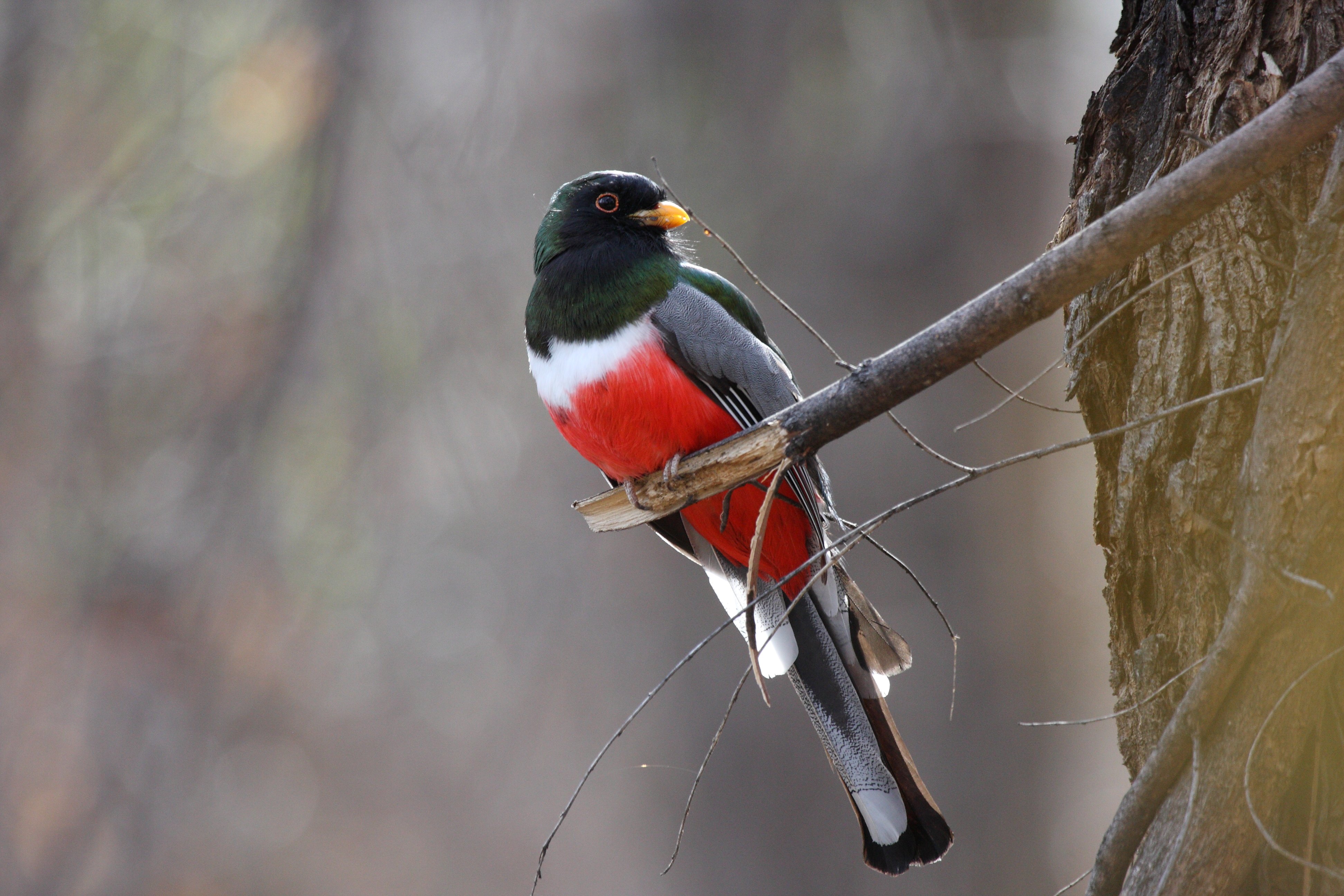
The Mexican Chickadee nests in the United States in exactly one place: the Chiricahua Mountains of southeastern Arizona. Not one of several ranges. One. The entire US breeding population of this species fits inside a single sky island, a mountain range that rises abruptly from the Sonoran Desert floor and creates its own climate, its own ecosystem, and a bird list that has no parallel north of the Mexican border.
That is the central fact about birding in the Arizona Sky Islands. The mountain ranges here — the Santa Ritas, the Huachucas, the Chiricahuas — are biological islands surrounded by a sea of desert. Species that occur nowhere else in the United States breed in these canyons every summer: Elegant Trogon, Five-striped Sparrow, Buff-breasted Flycatcher, and more. At peak season, the region supports more bird species per square mile than almost anywhere in North America.
Southeastern Arizona reliably records over 500 species across all time, and the three mountain ranges covered in this guide — the Santa Ritas, Huachucas, and Chiricahuas — each offer trail access to habitat from desert scrub to conifer forest, all within a short drive of each other.
Why the Arizona Sky Islands Are a World-Class Birding Region
The Sky Islands are the product of geology and climate working together. During the last ice age, the cool, wet conditions of the Sierra Madre Occidental in Mexico extended north into present-day Arizona, allowing Mexican bird species to colonize these mountain ranges. When the climate warmed, the desert expanded and isolated each range. The birds stayed, trapped on their island summits.
The result is a birding region with two distinct appeals. First: the Mexican specialties found nowhere else in the US, including the Elegant Trogon (which breeds in four Arizona mountain ranges), the Arizona Woodpecker (endemic to the US-Mexico borderlands), and the Red-faced Warbler (a high-altitude pine-forest species). Second: the convergence of four major ecozones, bringing species from the Sonoran Desert, Chihuahuan Desert, Rocky Mountains, and Sierra Madre Occidental into a single accessible area.
The eBird checklist for the Sky Islands region is staggering. The Chiricahua Mountains alone stand at 375+ species. Madera Canyon in the Santa Ritas has logged 250+ species. Ramsey Canyon Preserve in the Huachucas has 239+. Birders who visit all three mountain ranges in a single week routinely log 200 to 250 species.
For other Southwest trail guides, see our posts on the Texas Hill Country and Pacific Northwest birding trails.
Trail 1: Madera Canyon Nature Trail — Santa Rita Mountains
Madera Canyon descends from the flanks of 9,453-foot Mount Wrightson through a north-facing drainage where sycamore and oak woodland along the creek gives way to pine and fir on the upper slopes. The Nature Trail follows the canyon floor through the richest birding zone, passing the famous Santa Rita Lodge feeders before climbing to shaded upper reaches where Elegant Trogons nest most reliably. The habitat transitions are dramatic: one hour you are watching hummingbirds at feeders at the picnic area, the next you are scanning sycamore canopies for the copper flash of a trogon's tail.
Few birding destinations in the United States carry the same reputation as Madera Canyon. Birders have been making pilgrimages here since the mid-20th century, drawn first by the Elegant Trogon and staying for everything else: the 14 species of hummingbirds recorded in the canyon, the four species of tanagers that can be found along the trail gradient (Summer, Hepatic, Western, and occasionally Flame-colored), and the sheer improbability of the place, a lush riparian corridor rising from desert grassland into a Mexican mountain forest.
The trogon arrives in late March and stays through September. Males hold territories along the upper canyon stream, where old-growth sycamores provide the nest cavities they require. The eBird Madera Canyon hotspot has logged 250+ species, making it one of the highest-diversity single-site lists in the continental United States.
The Santa Rita Lodge, located about 1.5 miles up the canyon road, maintains a world-class hummingbird feeding station. In summer the feeders attract Blue-throated Mountain-gem, the largest hummingbird in the United States, alongside Rivoli's Hummingbird, Black-chinned, Broad-tailed, and Anna's hummingbirds. During monsoon season (July and August), the feeders occasionally attract rarities from Mexico, including Plain-capped Starthroat and Violet-crowned Hummingbird.
🦜 Species to Watch For — Madera Canyon
💡 Pro Tip: Arrive at the Santa Rita Lodge feeders by 7 a.m. to observe hummingbirds before the mid-morning heat slows activity. Trogons are most vocal in the first two hours after sunrise: listen for the repetitive, frog-like "co-ah co-ah" call echoing from the upper canyon sycamores. Check the Madera Canyon eBird hotspot the evening before your visit for recent trogon sightings and exact locations.
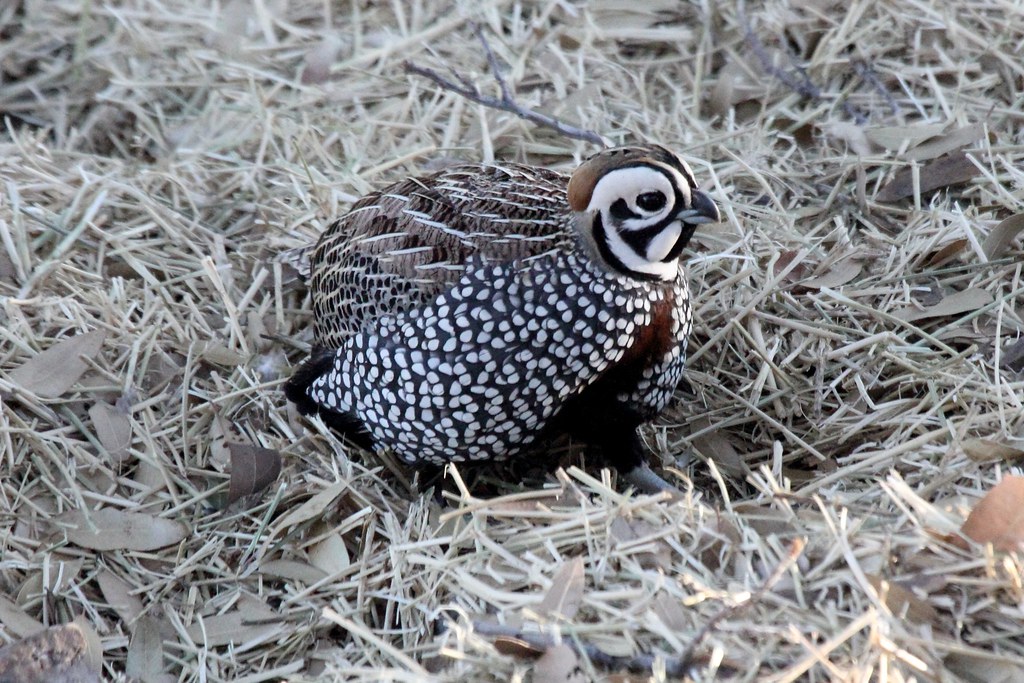
Montezuma Quail visit the feeders and grassy slopes throughout the Sky Islands, including Madera Canyon. Photo: Dominic Sherony / CC BY-SA 2.0 — view source
Trail 2: Ramsey Canyon Trail — Huachuca Mountains
The Ramsey Canyon Preserve, owned by The Nature Conservancy, protects a narrow canyon stream draining the east face of the Huachuca Mountains. The trail follows Hamburg Creek through a canopy of rare bigtooth maples and Arizona sycamores, with towering limestone cliffs visible above the tree line. The hummingbird feeders at the preserve entrance are among the most productive in the country. A per-person entrance fee is charged; the preserve is closed Tuesday and Wednesday.
Ramsey Canyon has a singular claim to fame: it may be the single best location in the United States to observe a large diversity of hummingbirds in one place. The Nature Conservancy feeders at the preserve entrance have recorded 14 species, and in late July and August the combination of resident species and vagrant Mexican visitors creates a spectacle unlike anywhere else north of the Mexican border.
The eBird Ramsey Canyon Preserve hotspot has logged 239+ species across all years. The canyon is especially productive for high-altitude species that require intact old-growth habitat: the Spotted Owl nests in the upper canyon, and Buff-breasted Flycatcher, a US rarity with its main range in Mexico, can be found in the pine zone above the preserve.
The trail itself is short but dense with activity. Painted Redstart — one of the most visually striking warblers in North America, jet-black with bold white wing patches and a red belly — fans its tail constantly along the creek edges. Red-faced Warbler descends to the creek in the mornings from the pines above. And Elegant Trogon nests in Ramsey Canyon every summer, often at surprisingly low elevations near the preserve entrance.
🦜 Species to Watch For — Ramsey Canyon
💡 Pro Tip: Ramsey Canyon is closed Tuesday and Wednesday — plan your visit accordingly. The hummingbird feeders are most active in early morning; bring a chair and sit quietly near the entrance for 30 minutes before walking the trail. In late July and August, check the feeders closely for Plain-capped Starthroat and Lucifer Hummingbird, both recorded here during monsoon season. Check the Ramsey Canyon eBird hotspot for real-time sightings.
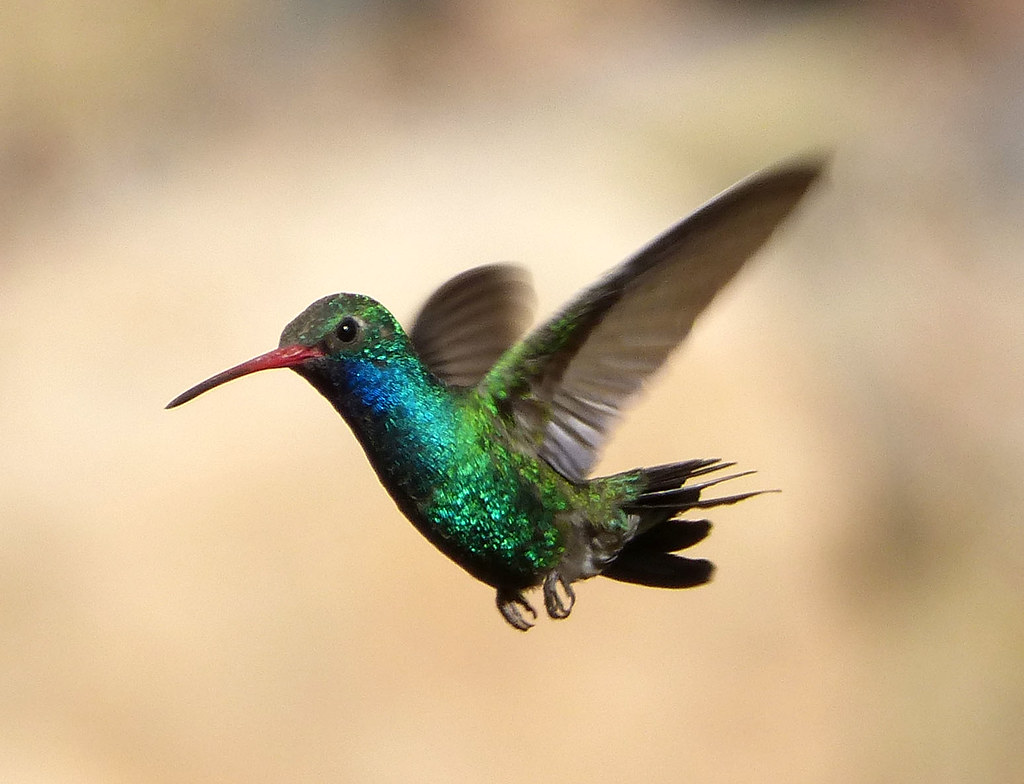
A male Broad-billed Hummingbird, one of the signature species of Ramsey Canyon Preserve and the surrounding Sky Islands, where hummingbird diversity peaks in July and August. Photo: gailhampshire / CC BY 2.0, view source
Trail 3: Cave Creek Canyon Trail — Chiricahua Mountains
Cave Creek Canyon cuts through the heart of the Chiricahua Mountains, Arizona's largest and most isolated sky island. The trail follows the creek through a dramatic canyon of rhyolite cliffs and towering Arizona sycamores, with six distinct habitat zones stacked from desert scrub at the canyon mouth to mixed conifer forest on the upper slopes. The town of Portal, population under 100, serves as the gateway. The South Fork of Cave Creek — an extension of the main trail — is where Elegant Trogons nest most reliably.
The Chiricahua Mountains are in a different category from other birding destinations in the United States. About half of all North American bird species have been recorded in this single mountain range. The canyon sits at the convergence of four major ecological zones, and the diversity that results is almost disorienting: in a single morning walk, you might see desert species from the Sonoran Desert, Rocky Mountain species from higher elevations, and Mexican species that reach their US range limit here and nowhere else.
The Mexican Chickadee is the species that makes this point most clearly. It occurs in the United States only in the Chiricahua Mountains, where a small resident population inhabits the high-elevation pine forests above 7,000 feet. Getting there requires a drive up the Pinery Canyon Road, but the Chickadee is typically easy to find once you are in the right habitat. Combined with Cave Creek Canyon at lower elevations, you can cover both in a single half-day.
The eBird Cave Creek Canyon hotspot has logged 310+ species, and the broader Chiricahua Mountains checklist stands at 375+ species. In addition to the Elegant Trogon (reliable in the South Fork from late April through August), the canyon offers Montezuma Quail, a quail species with a harlequin face pattern that skulks in grass under oaks and is often overlooked until it flushes underfoot. Elf Owl, the world's smallest owl at 5 inches, calls from sycamore cavities after dark. And Five-striped Sparrow, one of the rarest birds in the United States, can sometimes be found on the rocky brushy slopes near the canyon entrance.
🦜 Species to Watch For — Cave Creek Canyon
💡 Pro Tip: The South Fork of Cave Creek, about 1 mile past the Portal store, is where birders find Elegant Trogon most reliably. Walk slowly and listen for the "co-ah co-ah" call coming from the sycamore canopy. For Mexican Chickadee, drive the Pinery Canyon Road from Willcox up to the high elevation pine forest (around mile marker 20+); the chickadees travel in mixed flocks with Red-breasted Nuthatch and Yellow-rumped Warbler. Check the Cave Creek Canyon eBird hotspot for current trogon territory locations before visiting.
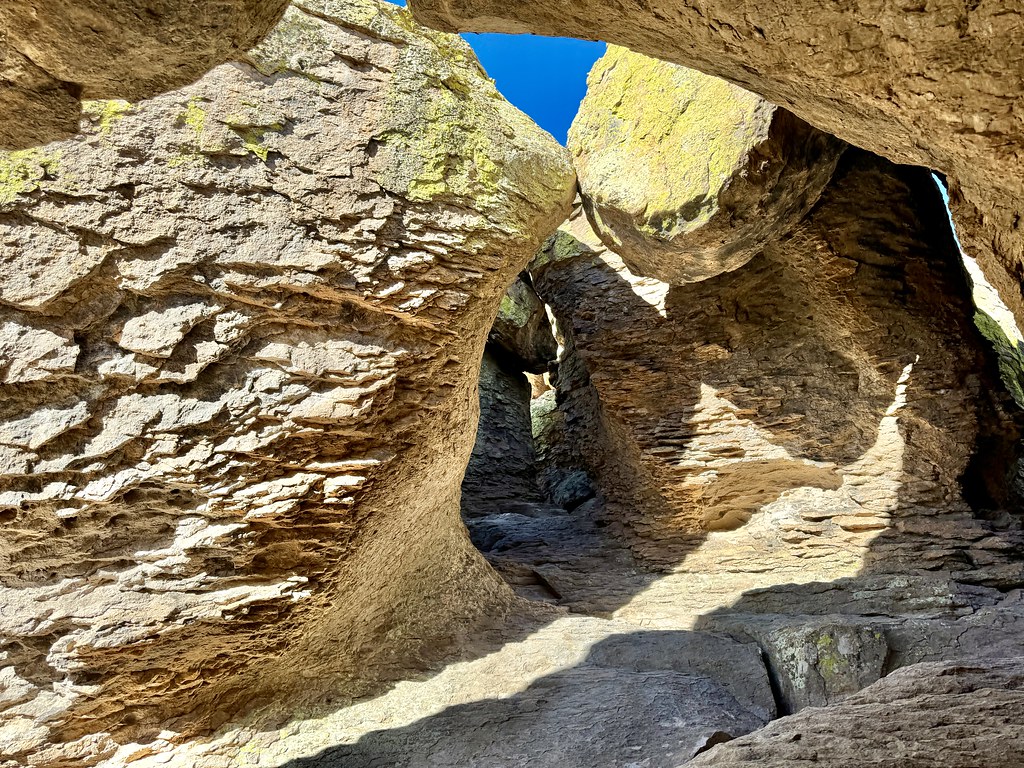
The Chiricahua Mountains' volcanic terrain: Echo Canyon Trail, formed from 27-million-year-old rhyolitic tuff, sits in the same range as Cave Creek Canyon. Photo: Warren LeMay / CC BY-SA 2.0 — view source
Seasonal Guide: When to Visit the Arizona Sky Islands
🌸 Spring (March–May)
Elegant Trogons begin arriving from Mexico in late March, with territories established through April. Black-chinned and Broad-tailed Hummingbirds return to all three canyons. May is peak warbler diversity, with Red-faced Warbler, Painted Redstart, and Grace's Warbler singing from the pine-oak zone. Spring is the quietest season for crowds and the best for unobstructed views of singing males.
☀️ Summer (June–August)
The monsoon arrives in early July, transforming the canyons with lush vegetation and temporary waterfalls. Hummingbird diversity peaks in August: up to 14 species have been recorded at Ramsey Canyon feeders. Mexican vagrants such as Berylline Hummingbird, White-eared Hummingbird, and Plain-capped Starthroat are most likely during this period. Sulphur-bellied Flycatcher, Yellow-billed Cuckoo, and Thick-billed Kingbird arrive. This is the busiest season for birders and the most rewarding for diversity.
🍂 Fall (September–November)
Elegant Trogons linger into September before heading south; late September offers a last chance at trogon without summer crowds. October brings exceptional sparrow diversity, with Lincoln's, Vesper, and Lark Sparrows moving through the canyon grasslands. Raptor migration through the Huachuca Mountains peaks in September. The bigtooth maples at Ramsey Canyon turn brilliant orange and red in late October, making it one of the most scenic fall destinations in the Southwest.
❄️ Winter (December–February)
Winter is the quietest season, but the Sky Islands never fully shut down. Mexican Chickadee, Arizona Woodpecker, and Yellow-eyed Junco are resident in their respective mountain ranges year-round. Wintering raptors patrol the desert grasslands below: Ferruginous Hawk, Prairie Falcon, and American Kestrel are all reliable. February marks the arrival of the first returning Elegant Trogons, making late February a compelling shoulder-season target.
FAQ: Arizona Sky Islands Birding
When is the best time to see the Elegant Trogon in Arizona?
Late April through August is the prime window. Trogons arrive from Mexico starting in late March, with territories established by mid-April. The peak of nesting activity (May and June) is when males are most vocal and conspicuous. September sees the last birds before they depart south. All three ranges in this guide — the Santa Ritas, Huachucas, and Chiricahuas — host nesting Elegant Trogons.
What makes the Arizona Sky Islands different from other birding destinations?
The Sky Islands are biologically isolated mountain ranges surrounded by desert. During the last ice age, when the climate was cooler and wetter, Mexican bird species expanded north into these mountains. When the desert returned, those populations were stranded. The result is a cluster of mountain ranges that collectively hold more US bird species found nowhere else in North America than any comparable-sized region in the country. Species like Mexican Chickadee, Elegant Trogon, Five-striped Sparrow, and Buff-breasted Flycatcher have their entire US range confined to these mountains.
Do I need to pay to enter Ramsey Canyon Preserve?
Yes. Ramsey Canyon Preserve is managed by The Nature Conservancy and charges a per-person entrance fee. The preserve is also closed on Tuesdays and Wednesdays, so plan your visit for Thursday through Monday. Annual Nature Conservancy memberships include free entry. The preserve maintains exceptional hummingbird feeders and a small visitor center.
How many hummingbird species can I see in the Arizona Sky Islands?
Up to 14 species have been recorded at Ramsey Canyon Preserve alone. Across the Sky Islands region, 17 hummingbird species have been recorded in Arizona, more than in any other US state. Peak diversity is in late July and August during the monsoon season, when Mexican vagrants such as Berylline Hummingbird, White-eared Hummingbird, and Plain-capped Starthroat appear at feeders.
Is Cave Creek Canyon worth the long drive from Tucson?
For anyone seriously interested in birding, yes. Cave Creek Canyon is two hours from Tucson, but the species it offers — Mexican Chickadee, Five-striped Sparrow, Montezuma Quail, Whiskered Screech-Owl — cannot be found anywhere else in the United States with the same reliability. Most birders combine it with a night in Portal or Rodeo to cover the canyon in the early morning, when activity is highest.
More Sky Island and Southwest Trail Guides
Looking for more birding trail guides across the American West and Southwest? These posts pair AllTrails data with eBird hotspot information for similar birding regions:
- Texas Hill Country Birding: Balcones Canyonlands, Lost Maples and Pedernales Falls — The Golden-cheeked Warbler breeds only in Texas; three Hill Country trails to find it.
- San Francisco Bay Area Birding Trails — Point Reyes, Golden Gate Park, and Don Edwards NWR for Pacific Coast shorebirds and landbirds.
- Pacific Northwest Birding Trails — Hoh Rain Forest, Hurricane Ridge, and Mount Rainier for Olympic and Cascade Mountain specialties.
Get the Next Guide in Your Inbox
New regions drop every few weeks. Subscribe and never miss a trail guide.
Subscribe Free →Photo Credits
- Hero image: Male Elegant Trogon (Trogon elegans). Photo by Dominic Sherony / CC BY-SA 2.0. No changes made.
- Inline image 1: Male Montezuma Quail (Cyrtonyx montezumae). Photo by Dominic Sherony / CC BY-SA 2.0. No changes made.
- Inline image 2: Echo Canyon Trail, Chiricahua National Monument, Arizona. Photo by Warren LeMay / CC BY-SA 2.0. No changes made.