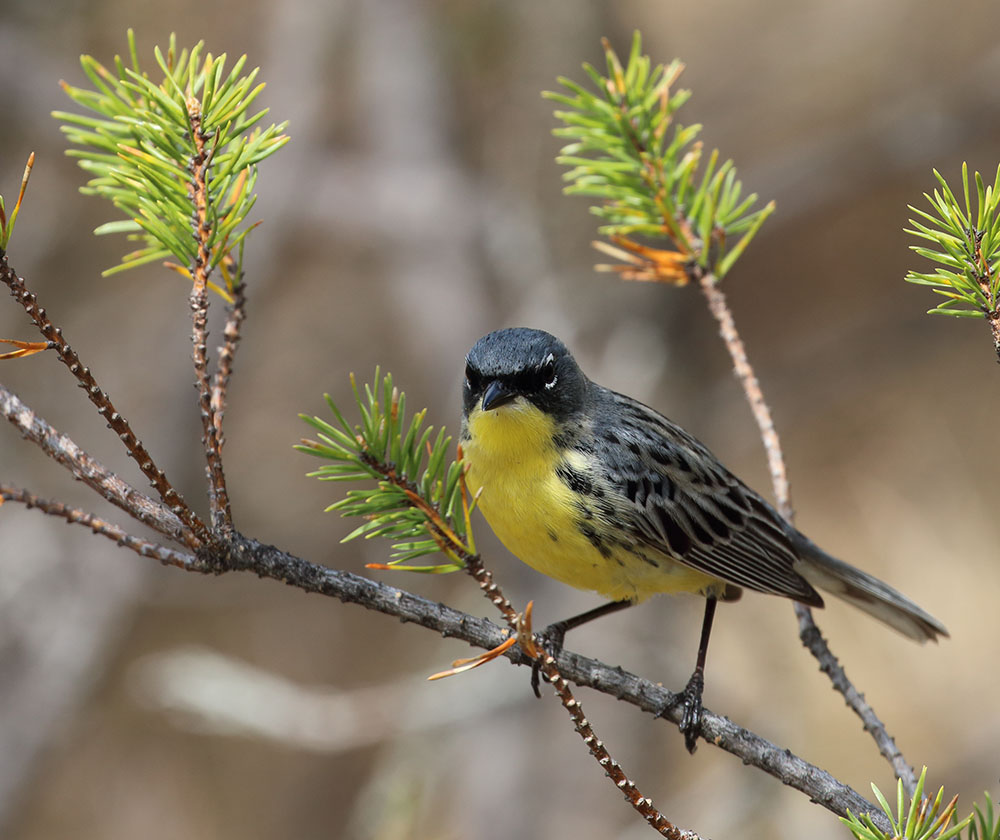
There is a bird you can only see in one place on Earth. The Kirtland's Warbler, a big, bold, brilliant yellow warbler with a persistent tail-pump and a loud, rolling song, nests exclusively in young jack pine forests in Michigan's Lower Peninsula. That single fact makes the LP one of the most compelling birding destinations on the continent. But the Kirtland's is just the beginning.
The Lower Peninsula sits at the convergence of two Great Lakes, Huron to the east, Michigan to the west, and both shorelines act as migration funnels, concentrating songbirds, raptors, and shorebirds into choke points that birders travel hundreds of miles to reach. This guide covers the three must-do birding trails in the region, cross-referenced with eBird hotspot data and AllTrails reviews so you know exactly where to walk, when to go, and what to look for.
Why Michigan's Lower Peninsula Is a World-Class Birding Region
The LP is a convergence zone. Spring migrants pour in from the south as the Great Lakes warm, and the narrow peninsulas and sandy spits that jut into the lakes force birds to concentrate before they continue north. The result is extraordinary density: 298 species at Tawas Point alone, more than 250 at Sleeping Bear Dunes National Lakeshore, and one location where a single endangered warbler defines the whole birding calendar.
Michigan is also part of the Kirtland's Warbler Alliance conservation story: after dropping to fewer than 200 singing males in the 1970s, the species has rebounded to more than 2,000 pairs, entirely due to active jack pine management in the LP. Birding here is not just recreation: it's a front-row seat to one of North America's greatest conservation turnarounds.
For Atlantic Flyway migration just as dramatic but entirely urban, see our NYC birding trails guide. For old-growth rainforest and alpine birding on the Pacific Flyway, explore our Pacific Northwest birding guide. For Mississippi Flyway migration at the southern tip of Lake Michigan, see our Chicago & North Shore birding guide.
Trail 1: Tawas Point via Sandy Hook Nature Trail (East Tawas)
A flat loop through sand dunes, mixed woodland, wetland edge, and open Lake Huron shoreline. The spit's geography funnels migrating birds toward the lighthouse: on peak spring mornings, every tree can hold a warbler. Follow the Sandy Hook Nature Trail out to the point, then return along the bay beach.
If you ask Michigan birders where to spend a May morning, the answer is almost always Tawas Point. The park sits at the tip of a narrow sand spit that extends into Tawas Bay on Lake Huron, creating exactly the kind of geographic bottleneck that concentrates migratory birds. Exhausted nocturnal migrants that have crossed the lake overnight make landfall here, and the limited tree cover means every warbler, vireo, and thrush becomes visible at close range.
The Tawas Point SP eBird hotspot has logged 298 species, and on peak migration mornings in the second week of May, it's not unusual to observe 20+ warbler species before breakfast. The third weekend in May is the annual Tawas Point Birding Festival, timed to the statistical peak of spring migration, when organized walks and guided tours make the park especially accessible for newer birders.
The habitat diversity adds to the appeal: the inner path threads through shrubby woodland where warblers and thrushes land; the sandy beach draws loafing terns and shorebirds; the bay side holds waterfowl and diving ducks. Look for Whimbrel resting on the beach in mid-May, an unexpected shorebird highlight for a freshwater location.
🦜 Species to Watch For at Tawas Point
💡 Pro Tip: The best conditions at Tawas Point arrive on the first clear, warm morning after several days of cold northerly winds have grounded birds. Check the Tawas Point eBird bar charts before your trip; the species frequency graphs show exactly which warblers peak in which week. Arrive at dawn and walk slowly; bird activity drops dramatically by 9 a.m.

Tawas Point State Park on Lake Huron, nicknamed the "Warbler Capital of Michigan" and the best migrant trap on the eastern shore of the Lower Peninsula. Photo: via Wikimedia Commons, view source & license
Trail 2: Empire Bluff Trail at Sleeping Bear Dunes National Lakeshore
A well-maintained trail climbing through a beech-maple forest to a dramatic bluff overlook above Lake Michigan. The forest section is rich with breeding and migrating songbirds; the open bluff is ideal for watching fall hawk migration and scanning the lake for loons and scoters. Boardwalk at summit with panoramic views.
Sleeping Bear Dunes National Lakeshore is designated an Important Bird Area (IBA) by the American Bird Conservancy, and the Empire Bluff Trail is its finest single hike for birding. The trail climbs through a gorgeous beech-maple forest, the understory ringing with the fluted song of Wood Thrushes and the zee-zee-zoo of Black-throated Green Warblers, before breaking out onto a high coastal bluff with sweeping views over Lake Michigan.
The park has recorded more than 250 species, with the lake and its shoreline adding an entirely different set of birds to the forest species list. Piping Plovers, among the most endangered shorebirds in North America, nest on the sandy beaches of Sleeping Bear, and the park is one of the most important Great Lakes nesting sites for the species. Look but give them wide space during the breeding season (May–July).
In fall, the bluff becomes a hawk-watch, with Broad-winged Hawks streaming south in September kettles and Sharp-shinned and Cooper's Hawks moving along the lakeshore. The lake itself hosts Common Loons and diving ducks (Long-tailed Ducks, White-winged and Surf Scoters) from October through freeze-up.
🦜 Species to Watch For at Sleeping Bear Dunes

The Empire Bluff overlook, a boardwalk atop the bluff with panoramic Lake Michigan views. In fall, Broad-winged Hawk kettles pass here in the thousands. Photo: via Wikimedia Commons, view source & license
Trail 3: Kirtland's Warbler Jack Pine Tour (Grayling / Mio)
A guided 2.5–3 hour walking tour through young jack pine habitat managed specifically for Kirtland's Warbler nesting. Tours run May 15–July 4 daily. Hartwick Pines tours ($20 + park pass) are run by Michigan Audubon; Mio tours ($10) depart the U.S. Forest Service ranger station. Pre-registration required for both. Reserve early; tours sell out.
No experience in Michigan birding compares to hearing, then seeing, a Kirtland's Warbler at close range. This large, boldly patterned warbler with bright yellow underparts and a habit of constantly pumping its tail was once teetering on the edge of extinction. In the early 1970s, the entire world population had fallen to around 167 singing males, entirely restricted to a specific zone of Michigan's LP where young, 5–20-year-old jack pine stands grow in well-drained sandy soil.
Decades of intensive management by the U.S. Forest Service, U.S. Fish & Wildlife Service, and Michigan DNR, clear-cutting mature stands, replanting jack pine, and controlling Brown-headed Cowbird nest parasitism, have driven the population above 2,000 singing males. The species was removed from the federal Endangered Species List in 2019. That is a genuinely remarkable story, and the guided tours put you at the center of it.
The Kirtland's Warbler Alliance and Michigan Audubon offer tours out of Hartwick Pines State Park near Grayling, while the U.S. Forest Service runs tours from the Mio Ranger Station. Both give you a knowledgeable guide, an intimate look at jack pine habitat, and, on most mornings, a singing male within a few yards. These are morning-only tours; the birds go quiet by mid-morning.
🦜 Species to Watch For at Jack Pine Tour
💡 Pro Tip: Book Kirtland's Warbler tours weeks in advance: they sell out, especially for June weekends. Tours depart at 7:00 a.m. sharp. Wear muted colors (avoid bright whites or reds), bring 8x42 binoculars, and speak quietly on approach to singing males. Check the Kirtland's Warbler tour page for current booking links for both the Grayling and Mio sites.

A Kirtland's Warbler in its only breeding habitat: young jack pine forest in northern Michigan. This species was brought back from the brink of extinction through decades of conservation work. Photo: Joel Trick/USFWS / Public Domain, view source
Best Times to Bird the Michigan Lower Peninsula: A Seasonal Guide
The Great Lakes create their own microclimate: moderating winter temperatures along the lakeshore, triggering heavy lake-effect snowfall, and delaying spring just enough that migration peaks slightly later here than in Ohio or Indiana. Plan accordingly.
🌸 Spring (April–May)
The LP's peak birding season. Palm and Yellow-rumped Warblers arrive in mid-April; the main warbler wave hits the second and third week of May. Tawas Point Birding Festival falls on the third weekend of May. Kirtland's Warbler tours begin May 15 and run through early July.
☀️ Summer (June–July)
Kirtland's Warbler tours continue through July 4. Piping Plovers are actively nesting on Sleeping Bear beaches; observe from a distance. Breeding songbirds fill the beech-maple forests. Common Loons call on inland lakes at dawn and dusk.
🍂 Fall (August–November)
Broad-winged Hawk migration peaks in mid-September with spectacular kettles over the Lake Michigan ridge. Songbird fallouts happen along both lake shorelines after cold fronts. Long-tailed Ducks and scoters appear on the Great Lakes by October.
❄️ Winter (December–March)
Snowy Owls irrupt into open farm fields and lake shorelines in good years. Short-eared Owls hunt grasslands at dusk. Christmas Bird Counts around Saginaw Bay and Traverse City regularly top 80–100 species. Ice fishing attracts Bald Eagles to open leads.
FAQ: Michigan Lower Peninsula Birding
Where can I see a Kirtland's Warbler in Michigan?
The only place to reliably see Kirtland's Warbler is on a guided jack pine tour near Grayling or Mio in the Lower Peninsula. Michigan Audubon runs morning tours from Hartwick Pines State Park (mid-May through late June, $20 + park pass); the U.S. Forest Service runs tours from the Mio Ranger Station (May 15–31, $10). Book at least 2–3 weeks in advance; tours routinely sell out. Visit kirtlandswarbler.org for current booking links.
What is the best birding trail in Michigan's Lower Peninsula?
For sheer species count and spring migration spectacle, Tawas Point State Park on Lake Huron is the top choice, with 298 species logged on eBird. The Sandy Hook Nature Trail is easy, flat, and best in the second week of May. For scenery plus birding diversity across lakeshore, forest, and open water habitats, Empire Bluff Trail in Sleeping Bear Dunes National Lakeshore (4.8 stars on AllTrails, 250+ species) is the most rewarding hike.
When is the best time to visit Tawas Point for birding?
The annual Tawas Point Birding Festival on the third weekend of May marks the statistical peak of spring warbler migration at the park. On calm, warm mornings after nights with southerly winds, the trees along the Sandy Hook Nature Trail can be packed with warblers: 20+ species in a single morning is typical. April also offers early migrants and shorebirds on the beach.
Do you need a permit for the Kirtland's Warbler tours?
You don't need a special birding permit, but both tour programs require advance reservations and charge small fees. The Hartwick Pines tours require a Michigan State Park Recreation Passport ($13/year or $8/day for Michigan residents). The Mio tours are $10 through Recreation.gov. Both are well worth booking for the experience.
More Trail Guides
- Chicago & North Shore Birding: Montrose Point (349 species, #1 in Illinois), Skokie Lagoons & Illinois Beach SP
- NYC Birding Trails: Central Park, Prospect Park & Jamaica Bay on the Atlantic Flyway
- Pacific Northwest Birding: Hoh Rain Forest, Hurricane Ridge & Mount Rainier on the Pacific Flyway
Get the Next Guide in Your Inbox
New regions drop every few weeks. Subscribe and never miss a trail guide.
Subscribe Free →📷 Photo Credits
Hero image of Kirtland's Warbler (Setophaga kirtlandii), jack pine habitat: U.S. Fish & Wildlife Service / Public domain. Via Wikimedia Commons.
Tawas Point Lighthouse: Via Wikimedia Commons.
Lake Michigan, Sleeping Bear Dunes: Via Wikimedia Commons.