New York City is not the first place that comes to mind when you think of pristine wilderness. But slip into Central Park at dawn in May, when a fallout of warblers drips from every oak in the Ramble, and the city disappears. With more than 500 species recorded across its five boroughs, New York City is one of the most spectacular urban birding destinations on Earth — and the trails to get you there are better than most people realize.
This guide highlights the three must-visit birding trails in NYC, drawing on eBird hotspot data and AllTrails reviews to give you everything you need: distances, difficulty, species lists, and the exact times to go.
Why New York City Is a World-Class Birding Destination
NYC sits squarely on the Atlantic Flyway, one of North America's four major bird migration corridors. Hundreds of millions of birds funnel up and down the Eastern Seaboard each spring and fall, and the patches of green in the city — Central Park, Prospect Park, the Jamaica Bay marshes — act like magnets, pulling exhausted migrants down for rest and refueling.
The result is extraordinary density. On a peak May morning in Central Park, you might find 30 species of warblers in a single outing. Jamaica Bay has logged more species than anywhere else in the five boroughs. And none of it requires a car — every location below is accessible by subway.
For Great Lakes migration spectacles on a different flyway, see our Michigan Lower Peninsula birding guide — or explore the Pacific Flyway with our Pacific Northwest birding guide. For Mississippi Flyway migration concentrated along Lake Michigan's edge, see our Chicago & North Shore birding guide.
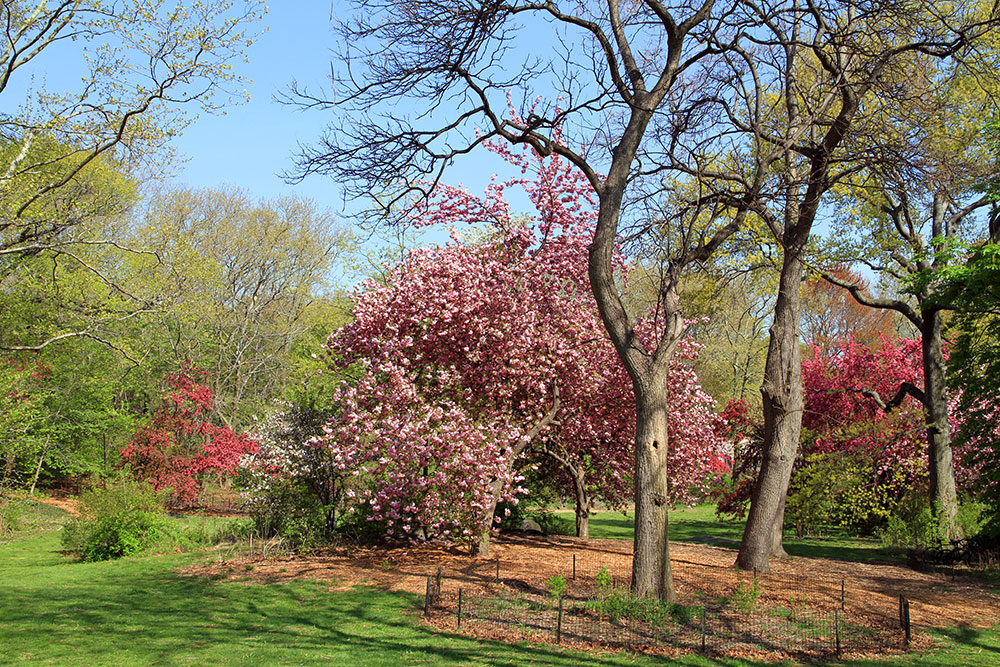
The Ramble in Central Park — 36 acres of intentionally wild woodland that draws more warbler species per acre than nearly any other spot in North America during spring migration. Photo: Wikimedia Commons / CC BY-SA 3.0 — view source & license
Trail 1: Central Park — The Ramble Loop (Manhattan)
Start at the 79th Street entrance, drop into the Ramble's dense woodland, then loop around the Jacqueline Kennedy Onassis Reservoir for open-water species. Return via the north end of the Ramble past Oven Rock and Maintenance Meadow. Allow 2–3 hours to do it justice.
The Ramble is where the magic happens. This 36-acre woodland is intentionally kept wild and dense, a deliberate oasis of tangled shrubs, native plantings, and a meandering freshwater stream called The Gill. For a neotropical warbler that's just flown overnight from the Gulf Coast, it's paradise — and birders have known it for 150 years.
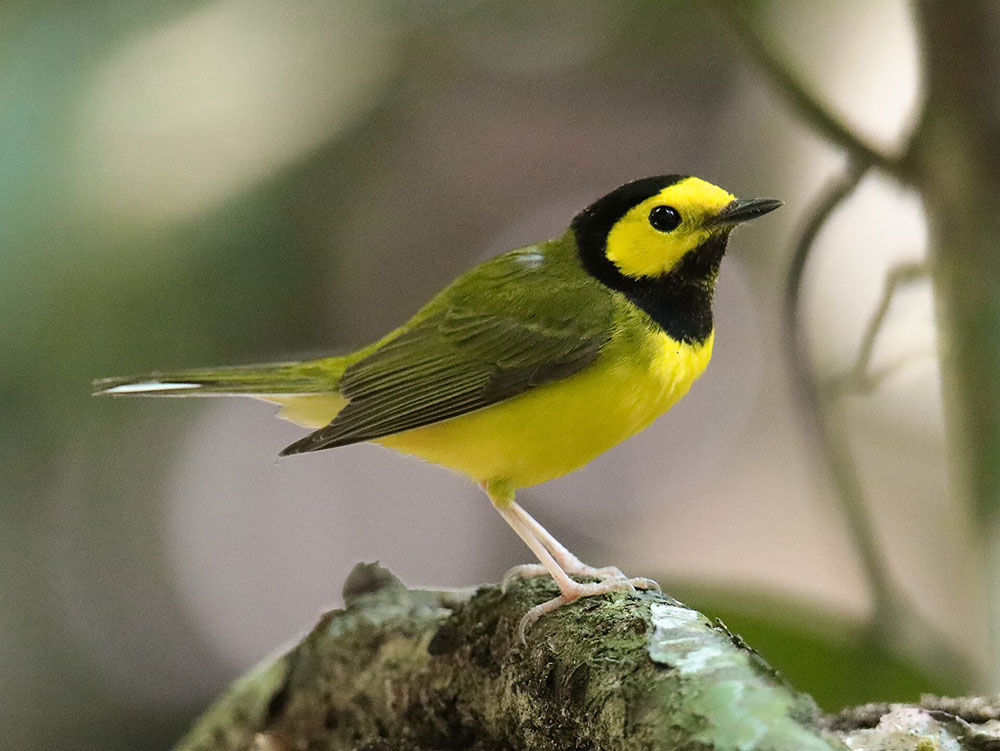
On a peak migration day in the second week of May, 30 warbler species in a single morning is not unusual. Hooded Warblers are the crowd favorite, their black-and-yellow masks drawing gasps from even veteran birders. Keep watch for Prothonotary Warblers (an "overshoot" species that breeds further south but regularly appears here), American Redstart, Blackburnian Warbler, and the stunning Blackpoll Warbler. The best conditions arrive on the first clear morning after several days of northerly winds, especially when southerly winds then push a mass of birds northward overnight.
🦜 Species to Watch For — Central Park
💡 Pro Tip: The Central Park Bird Count on eBird consistently lists the most up-to-date sightings — check the Central Park eBird hotspot the night before your visit to see what's been reported. Arrive at dawn; warbler activity peaks in the first 2 hours after sunrise.
Trail 2: Prospect Park Loop (Brooklyn)
The full perimeter loop connects Prospect Lake, the Midwood forest, Lookout Hill (the park's highest point), and Boulder Bridge — each section distinct habitat. Rated 4.7 stars from over 2,700 AllTrails reviews.
If Central Park is NYC's most famous birding spot, Prospect Park is its Brooklyn rival — and for many serious birders, the preferred one. Designated an Important Bird Area (IBA) by the National Audubon Society, Prospect Park has recorded 289 species on eBird, including some legendary rarities.
The park's geography gives it an edge: Lookout Hill rises 112 feet above sea level, and the Midwood — Brooklyn's only remaining old-growth forest — provides dense understory that warblers and thrushes can't resist. Head to Boulder Bridge in late April or early May and you can watch migratory warblers moving through the canopy at eye level, sometimes close enough that binoculars are overkill.
On a peak spring migration day, Prospect Park's species count can top 100 species, including five species of vireo in a single morning, Rose-breasted Grosbeak, Indigo Bunting, and an astonishing diversity of warblers. In fall, Prospect Lake draws large numbers of waterfowl, and the meadows host sparrow diversity that will challenge even experienced birders.
🦜 Species to Watch For — Prospect Park
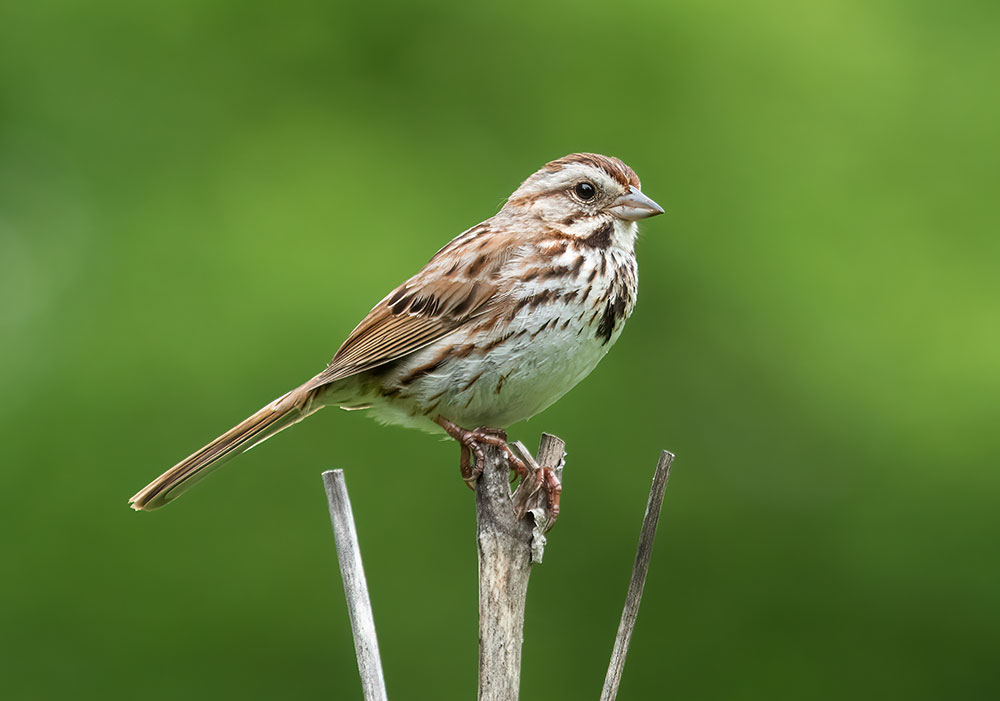
A Song Sparrow in Prospect Park — one of 289 species recorded by eBirders in this Important Bird Area. Photo: National Park Service / Public domain — view source
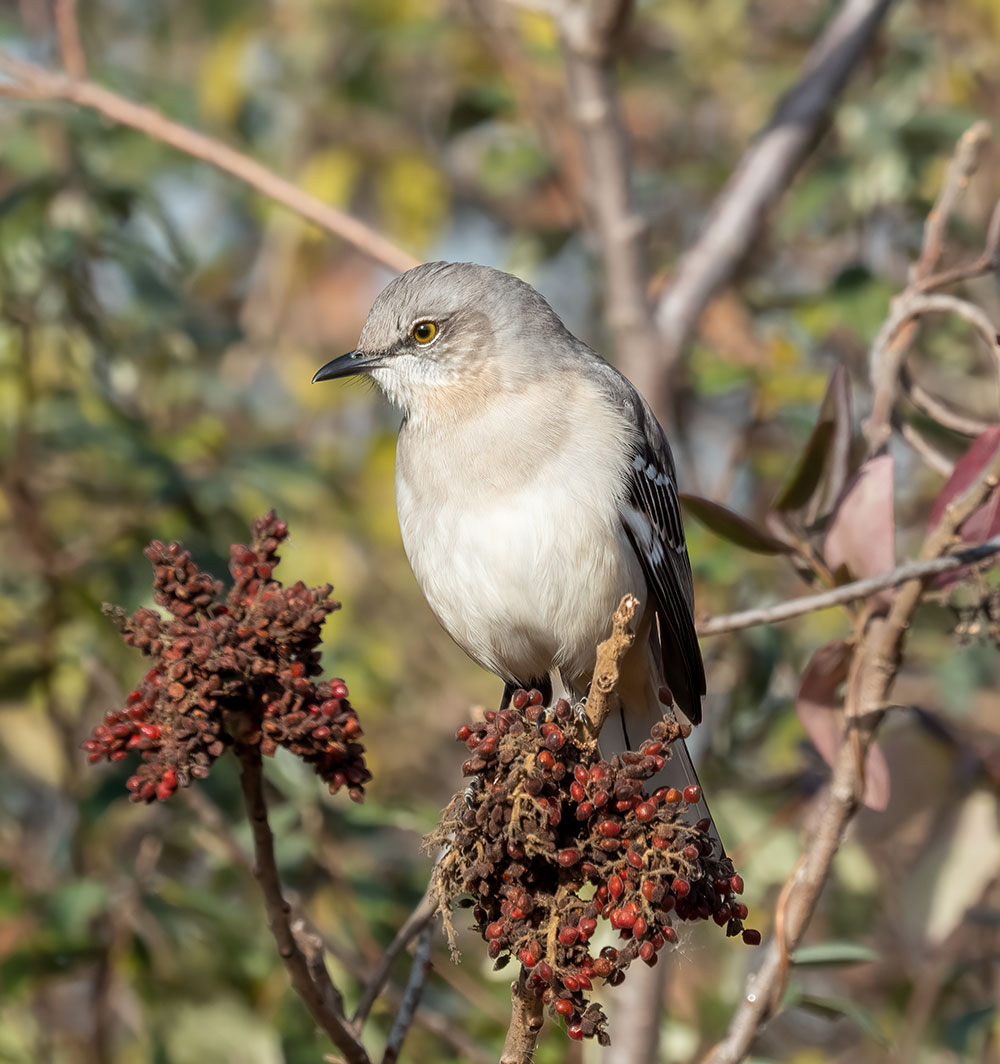
Jamaica Bay Wildlife Refuge — the single most species-rich birding location in New York City, with 322 species logged on eBird. Photo: National Park Service / Public domain — view source
Trail 3: Jamaica Bay Wildlife Refuge — West Pond Loop (Queens)
A flat gravel loop circling West Pond with expansive bay views, tidal marsh edges, and open scrub — one of the most biodiverse 4 miles in the entire Northeastern U.S. Part of Gateway National Recreation Area; free to visit.
Jamaica Bay is where the numbers get staggering. With 322 species reported to eBird — more than any other single location in New York City — this refuge in southern Queens is nothing short of extraordinary. The West Pond Loop is the trail to do, a flat 4.2-mile gravel path that circles a 45-acre freshwater pond, ringed by salt marsh, upland scrub, and open bay. The NYC skyline hovering on the northern horizon makes the whole scene feel almost implausible.
The refuge is managed by the National Park Service as part of Gateway National Recreation Area and is completely free to enter. Mid-May brings a phenomenon unique to Jamaica Bay: the horseshoe crab spawning on the bay's beaches, which in turn draws thousands of shorebirds — Ruddy Turnstones, Sanderlings, Red Knots — to refuel on the eggs before completing their journeys to Arctic breeding grounds.
Year-round, Jamaica Bay rewards patience. Barn Owls nest in the refuge's nest boxes — one of the few places in NYC where they breed reliably. Virginia Rails and Marsh Wrens call from the phragmites edges. In winter, Short-eared Owls hunt the open meadows at dusk. Yellow-billed Cuckoo, Least Bittern, and Glossy Ibis make regular appearances in summer.
🦜 Species to Watch For — Jamaica Bay
💡 Pro Tip: The refuge visitor center on Cross Bay Boulevard has up-to-date trail conditions and recent sightings boards. Arrive early — the first hour after sunrise sees the highest shorebird and wading bird activity along the pond edges. Bring a spotting scope; the bay views benefit from the extra magnification.
Best Times to Go Birding in NYC: A Seasonal Guide
New York City's position on the Atlantic Flyway means there's genuinely great birding in every season — just different birds and different parks take center stage.
🌸 Spring (March–May)
Peak warbler migration hits the second week of May. Shorebirds peak mid-May coinciding with horseshoe crab spawning at Jamaica Bay. Best birding of the year — a clear day after southerly winds can produce 100+ species.
☀️ Summer (June–August)
Nesting raptors in Prospect Park. Osprey and wading birds at Jamaica Bay. Southbound shorebird migration begins in late July — Jamaica Bay and Marine Park are the top spots.
🍂 Fall (September–November)
Hawk migration peaks in September over the ridgelines of Staten Island and New Jersey across the bay. Sparrow diversity in the meadows of Jamaica Bay and Prospect Park peaks in October.
❄️ Winter (December–February)
Irruptive owls — Snowy Owls at Floyd Bennett Field, Long-eared Owls in Jamaica Bay scrub. Waterfowl pack the reservoirs and bays. The annual Christmas Bird Count regularly tops 130 species in NYC.
FAQ: NYC Birding
What is the best place to go birdwatching in New York City?
Jamaica Bay Wildlife Refuge in Queens holds the record with 322 species reported to eBird — more than any other single NYC location. Central Park's Ramble is the most famous urban birding spot, while Prospect Park has recorded 289 species and is designated an Important Bird Area.
When is the best time to go birding in Central Park?
The second week of May is the peak of spring migration in Central Park. On a good day, birders can spot up to 30 warbler species in The Ramble. Fall migration peaks in September, and winter brings irruptive species like Snowy Owls to nearby Floyd Bennett Field.
Do I need a permit to bird at Jamaica Bay Wildlife Refuge?
No permit is required. Jamaica Bay Wildlife Refuge is part of Gateway National Recreation Area, managed by the National Park Service, and is free and open to the public year-round. The visitor center on Cross Bay Boulevard is open most days and has trail maps and recent sightings information.
What birding gear do I need for NYC trails?
Binoculars (8x42 is the most versatile), a field guide or the Merlin Bird ID app (free from Cornell Lab), and comfortable walking shoes. A spotting scope adds value at Jamaica Bay's open bay views. None of these locations require specialized gear.
More Trail Guides
- Chicago & North Shore Birding — Montrose Point, Skokie Lagoons & Illinois Beach SP on the Mississippi Flyway
- Michigan Lower Peninsula Birding — Kirtland's Warbler tours, Tawas Point, and Sleeping Bear Dunes on the Great Lakes flyway
- Pacific Northwest Birding — Hoh Rain Forest, Hurricane Ridge, and Mount Rainier on the Pacific Flyway
Get the Next Guide in Your Inbox
New regions drop every few weeks. Subscribe and never miss a trail guide.
Subscribe Free →📷 Photo Credits
Hero image — Hooded Warbler (Setophaga citrina), Central Park: © Rhododendrites, licensed under CC BY-SA 4.0. Via Wikimedia Commons.
The Ramble, Central Park: © Wikimedia Commons contributor, licensed under CC BY-SA 3.0.
Song Sparrow, Prospect Park: National Park Service / Public domain. Via Wikimedia Commons.
Northern Mockingbird, Jamaica Bay Wildlife Refuge: National Park Service / Public domain. Via Wikimedia Commons.