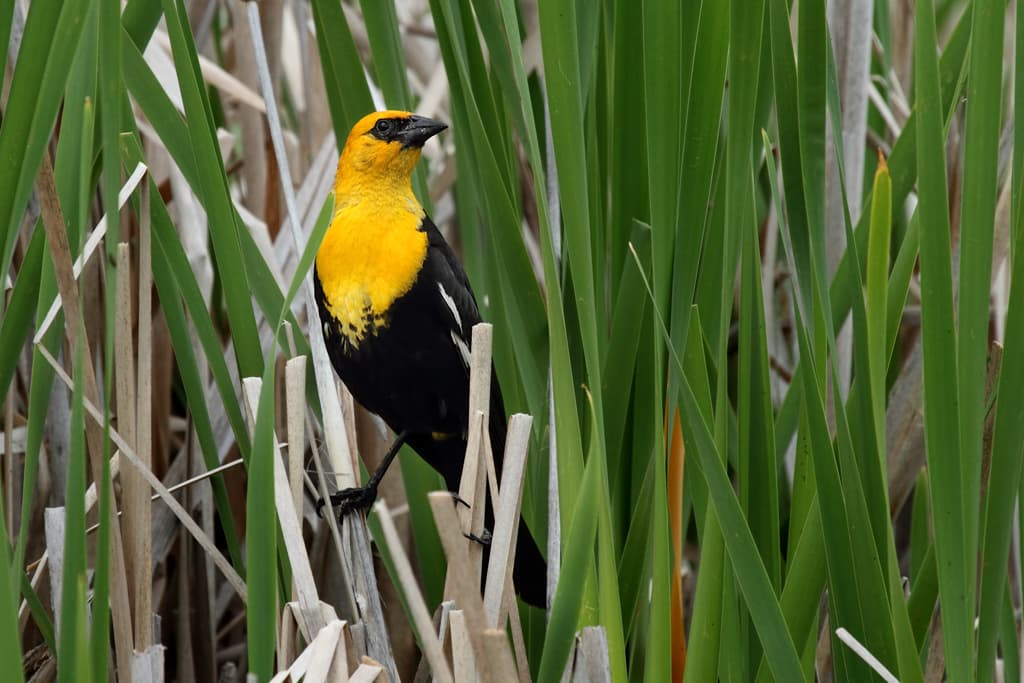
Montlake Fill is a former garbage dump. The University of Washington used it as a landfill for decades, then capped it and let it go fallow. Nature moved in (cattails, willows, open ponds, a tangle of brush and bramble) and the birds followed. Today, on a good May morning, it's possible to log 80 species on this 60-acre patch of reclaimed wetland in northeast Seattle without breaking a sweat. Yellow-headed Blackbirds shout from the cattails. Virginia Rails squeal in the reeds. Shorebirds work the muddy pond margins. It's one of the most productive urban birding sites in the United States, and it's a five-minute walk from a light rail station.
The Seattle region has a gift for this kind of thing. The Puget Sound is a 100-mile-long inland sea, and it stitches together an almost unbroken corridor of tidal marsh, estuarine flat, and managed wetland from Olympia in the south to the Canadian border in the north. Seattle sits in the middle of that corridor, with Montlake Fill practically in the city center, the extraordinary Nisqually River delta an hour to the south, and the Skagit Valley, one of the top three birding destinations in North America in winter, an hour to the north. This guide covers all three.
Why the Puget Sound Corridor Is One of North America's Top Birding Regions
The Pacific Flyway runs right up the coast, and the Puget Sound acts as a funnel within it, channeling miles of sheltered tidal flats and river deltas that provide critical staging and wintering habitat for millions of waterbirds. In winter, the numbers become almost implausible: more than 50,000 Snow Geese descend on the Skagit Valley's fields and bays each year, accompanied by 7,000+ Trumpeter and Tundra Swans and concentrations of Bald Eagles that make the trees look alive. On the south end of the Sound, the Nisqually delta's restored salt marsh and freshwater wetlands hold 278 species on eBird, making Billy Frank Jr. Nisqually NWR one of the most productive year-round birding refuges on the West Coast.
Seattle itself is part of the story. Green Lake, Discovery Park, and above all Montlake Fill give the city legitimate claim as one of the better urban birding destinations in the country. When birders talk about the Pacific Northwest, they usually mean the Olympic Peninsula or the Cascades. But the Puget Sound corridor is what separates Seattle from other birding cities: an almost continuous ribbon of wetland habitat with the city running right through the middle of it.
This Seattle region guide is a perfect complement to our Pacific Northwest birding guide, which covers the Hoh Rain Forest, Hurricane Ridge, and Mount Rainier. Those destinations require a full day's drive each way; the three trails here are all within 75 miles of downtown Seattle.
Trail 1: Union Bay Natural Area Loop at Montlake Fill (Seattle)
A short, flat loop through restored wetland on the shores of Union Bay, passing open ponds, cattail marsh, willow scrub, and a small meadow section. The "Fill" itself was the University of Washington's landfill from the 1920s to 1960s, capped and left to revegetate. The main loop is under a mile, but the area's informal paths add considerable ground. All surfaces are gravel or mowed grass, accessible in most weather. The real attraction is the density of habitat and the birds' unusual tolerance of observers.
Montlake Fill's most unusual quality is how close the birds let you get. Decades of respectful birder traffic have conditioned the wildlife here to human presence at a level you rarely encounter at less-visited sites. Virginia Rails, ordinarily skulking, secretive marsh birds that you more often hear than see, walk into the open at Montlake regularly. The Yellow-headed Blackbirds that arrive each spring to breed in the cattails perch at eye level and seem genuinely unbothered by a camera. It makes this a genuinely good site for beginning birders and photographers, not just specialists.
The Montlake Fill eBird hotspot has recorded over 200 species, an extraordinary total for a 60-acre urban wetland. The diversity comes from the site's position at the edge of Lake Washington: the open bay attracts diving ducks and grebes, the ponds pull in shorebirds during migration, the willows and scrub hold sparrows and warblers, and the relatively undisturbed cattail marsh supports nesting marsh birds that have no business being this close to a major research university.
Spring is the site's peak season. In late April and May, the cattails fill with newly arrived Yellow-headed Blackbirds singing their improbable mechanical grinding song, and the ponds attract a steady succession of migratory shorebirds: Wilson's Phalaropes, Pectoral Sandpipers, and occasional Stilt Sandpipers that are far more easily seen here than at most Washington sites. The fill also sits under a raptor migration corridor: Merlins and Peregrine Falcons cut through in spring and fall, and Short-eared Owls have been seen hunting the meadow section at dusk in winter.
🦜 Species to Watch For at Montlake Fill
💡 Pro Tip: The UW Botanic Gardens trail that runs along the east edge of the fill adds riparian woodland birding to the wetland loop and is worth combining. Bring rubber boots in winter; the informal paths through the cattail areas can get wet. Yellow-headed Blackbirds are reliable from late April through late June; the specific hotspot bar charts on the Montlake Fill eBird page show exactly which week each species peaks. For Virginia Rail, walk the east side of the main pond at dawn and listen for the descending kicker kicker kicker call, then wait. They will usually come out.
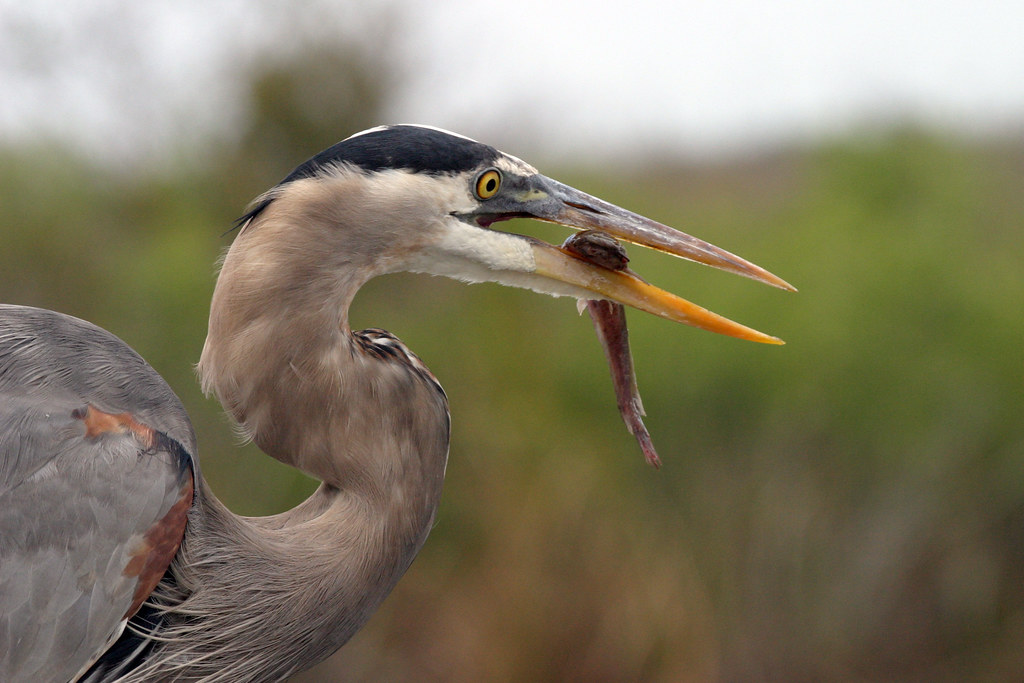
A Great Blue Heron hunts the shallows at Union Bay Natural Area, one of the year-round residents at this celebrated urban wetland. Photo: NPS/Everglades National Park / Public Domain, view source
Trail 2: Nisqually Estuary Boardwalk & Twin Barns Trail at Billy Frank Jr. Nisqually NWR (Thurston County)
A flat loop combining the famous mile-long Estuary Boardwalk, a timber walkway crossing the open tidal delta of the Nisqually River, with the Twin Barns Loop through freshwater wetland, riparian forest, and restored grassland. The boardwalk section is the centerpiece: elevated above the tidal marsh with unobstructed 360-degree views across the estuary and Puget Sound. The entire loop is flat, gravel-surfaced, and stroller/wheelchair accessible as far as the main boardwalk junction.
The Nisqually River delta was almost entirely converted to diked farmland by the early 20th century. A 1974 restoration project began converting it back to tidal wetland, and in 2009 the refuge completed a major dike removal that restored 762 acres of salt marsh in one of the largest single-day tidal wetland restorations in U.S. history. The estuary boardwalk was built across this newly restored marsh, and the speed with which the birds moved in was remarkable. The Billy Frank Jr. Nisqually NWR eBird hotspot has now accumulated 278 recorded species across more than 14,000 checklists, the most-checked birding hotspot in the South Puget Sound.
What makes the boardwalk exceptional for birding is its geometry: a mile-long elevated crossing of the open estuary, with salt marsh on both sides and views to the mouth of the Nisqually River and the open Sound beyond. In winter, Northern Pintail, Green-winged Teal, and American Wigeon pack the estuary in flocks of hundreds. Bald Eagles, sometimes 20 or more visible simultaneously, perch in the snags along the river channel and patrol the marsh edge. The Dunlin that winter on the estuary mudflats perform their characteristic flocking murmurations when disturbed, moving in tight silver-black waves just above the water surface.
The Twin Barns section of the loop adds a different dimension: the old farm buildings now serve as reference points in a restored freshwater wetland where Trumpeter Swans feed in winter, Sandhill Cranes stop during migration, and the thickets alongside the loop trail hold Hutton's Vireos, Bewick's Wrens, and year-round resident Downy Woodpeckers. The whole loop feels nothing like the usual birding refuge; it's remarkably diverse in a short distance, and the 4.7-star AllTrails rating reflects that even non-birders find it compelling.
🦜 Species to Watch For at Nisqually NWR
💡 Pro Tip: Time your boardwalk visit around the tide. At low tide, the estuary mudflats are exposed and shorebirds and dabbling ducks spread widely, sometimes distantly. At high tide, birds concentrate along the marsh edge close to the boardwalk, often within excellent viewing range. A mid-incoming tide is the sweet spot: birds are actively moving and feeding as water rises across the flats. The refuge visitor center posts tide charts; pick up a checklist there and ask staff what's been reported that week. The Nisqually NWR eBird hotspot community submits checklists almost daily year-round.
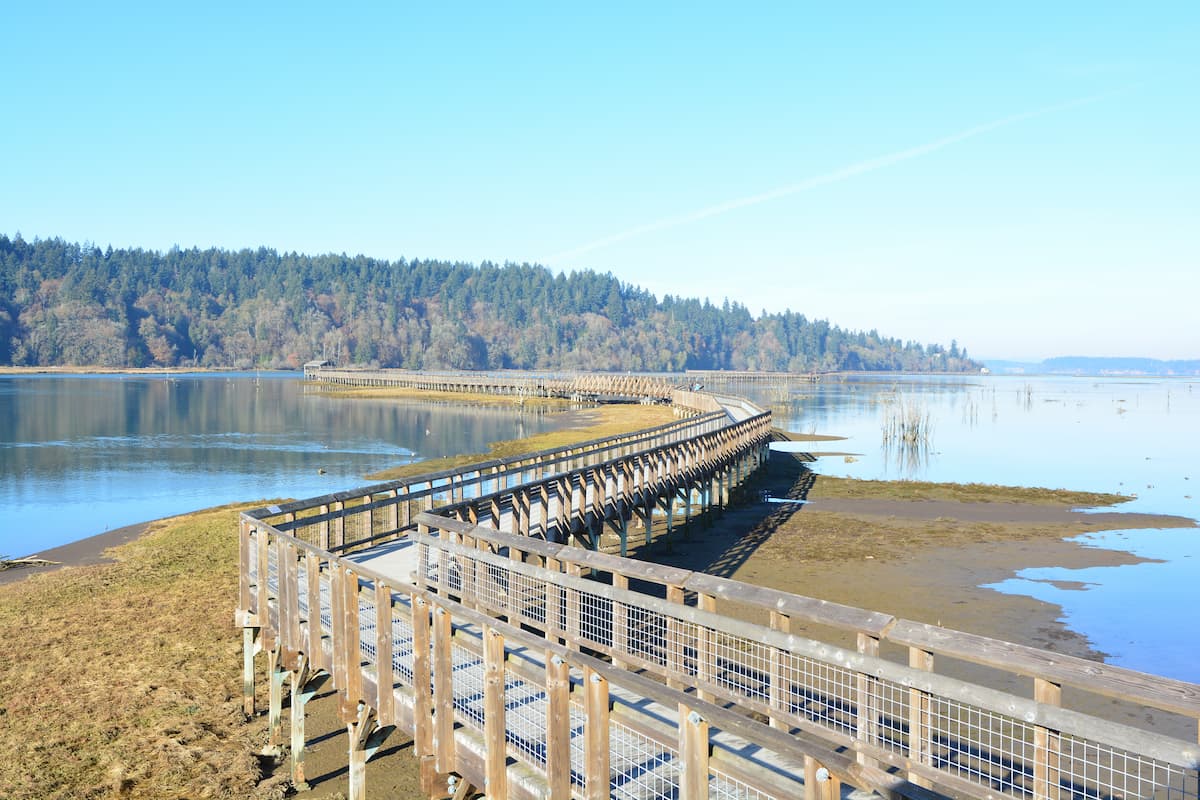
The Nisqually Estuary Boardwalk, a mile-long crossing of the Nisqually River delta restored from diked farmland to tidal salt marsh in 2009. The boardwalk gives unobstructed views across the estuary in both directions, making it one of the best shorebird and waterfowl viewing platforms in the Pacific Northwest. Photo: USFWS / Public Domain via Wikimedia Commons, view source
Trail 3: Padilla Bay Shore Trail at Skagit Valley (Skagit County)
A wide, flat dike trail built on top of a historic dike system at the edge of Padilla Bay, one of the largest eelgrass beds on the Pacific Coast. The trail runs 2.2 miles out along the dike with Padilla Bay's open water and mudflats on the west side and Skagit Valley farmland on the east. The combination of open bay, agricultural fields, and the Samish Flats grasslands within a short drive makes this the gateway trailhead for the full Skagit Valley winter birding circuit. Exposed and windswept in winter, so dress accordingly.
Nothing in Pacific Northwest birding quite prepares you for the Skagit Valley in winter. You're driving north of Mount Vernon on farm roads, looking at flat agricultural fields, when the first flock appears: a white smear on the horizon that resolves into hundreds of birds. Then thousands. The Snow Geese arrive from their Arctic breeding grounds in October and stay through March, with peak numbers between December and February. The official counts run to 50,000 birds, but on mornings when a disturbance lifts a major flock off the fields, the sky fills with sound and motion in a way that's genuinely difficult to describe.
The Padilla Bay Shore Trail is the anchor birding site for the Skagit Valley visit. The bay itself, a shallow, eelgrass-rich tidal embayment, draws thousands of Brant (small Pacific Coast geese), Dunlin, and diving ducks including Long-tailed Duck and Surf Scoter in winter. The dike trail gives unobstructed views across the bay in both directions, with the Skagit farmland behind you holding foraging Snow Geese, Trumpeter and Tundra Swans (7,000+ combined), and the raptor show that makes the Samish Flats legendary: Peregrine Falcons, Merlins, Rough-legged Hawks, Northern Harriers, and in exceptional winters, Gyrfalcons and Snowy Owls hunting the flat farmland within sight of the trail.
The Short-eared Owl is the Skagit Valley's most-sought winter specialty. They hunt the field margins and grasslands in the hour before dark, quartering low over the ground in buoyant, moth-like flight. Drive the Samish Flats roads (Conway Road, Fir Island Road, and the farm roads south of Bay View) at dusk from November through February, and you have a realistic chance of seeing multiple Short-eared Owls working the same field. It's one of the most accessible Short-eared Owl sites in North America.
🦜 Species to Watch For at Skagit Valley / Padilla Bay
💡 Pro Tip: The Padilla Bay trail is the anchor, but the full Skagit Valley winter circuit extends well beyond it. After walking the dike, drive south on Farm-to-Market Road toward Conway and Fir Island, where the Snow Goose and swan concentrations are often largest in the fields, especially in the morning before the birds disperse to roost. For Short-eared Owls, time your exit to be driving the Samish Flats roads (Samish Island Rd, Sullivan Rd) about 30 minutes before sunset. Check the Skagit County eBird hotspots before you go to see where birds are actively being reported that week; the community updates daily during the winter season.
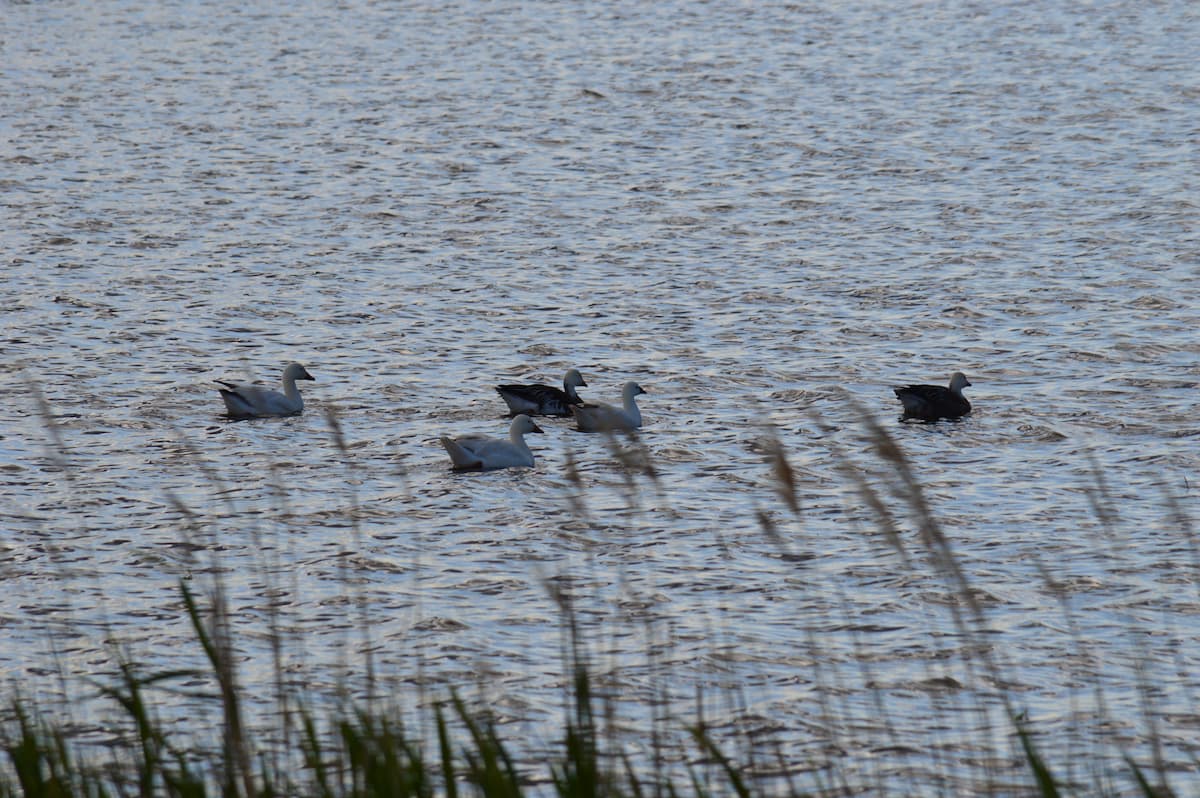
Snow Geese in flight: the spectacle that draws birders to the Skagit Valley each winter. Peak numbers of 50,000+ birds make this one of the largest Snow Goose concentrations in the Pacific Northwest. Photo: USFWS / Public Domain via Wikimedia Commons, view source
Best Times to Bird the Seattle Region: A Seasonal Guide
The Puget Sound corridor offers genuinely good birding in every month, but the strongest seasons vary dramatically by location. Montlake Fill peaks in spring migration; Nisqually is excellent year-round with a winter high; the Skagit Valley is winter-only at peak but has shoulder-season value from October through April.
🌸 Spring (March–May)
Montlake Fill hits its peak. Yellow-headed Blackbirds arrive in late April and are conspicuous through June. The ponds attract migrant shorebirds: Wilson's Phalaropes, Pectoral Sandpipers, and occasional Stilt Sandpipers, from late April through May. Rufous Hummingbirds appear at Montlake and throughout the region in April. At Nisqually, Sandhill Cranes stop in March, spring waterfowl migration peaks in April, and songbird migration fills the Twin Barns scrub in May.
☀️ Summer (June–August)
Breeding season across all sites. Yellow-headed Blackbirds at Montlake are on territory through late June. Nisqually's wetlands support nesting Great Blue Herons, Canada Geese, and dabbling ducks. The Padilla Bay trail is productive for non-migratory shorebirds and loafing Brant through July. The first southbound shorebirds, Western Sandpipers and dowitchers, begin appearing at Nisqually mudflats in late July.
🍂 Fall (September–November)
Shorebird migration peaks at Nisqually in September; Green-winged Teal and dowitchers arrive in numbers. Waterfowl pour into the Puget Sound: Bufflehead, Common Goldeneye, and Canvasback appear at Montlake's open water in October. Snow Geese arrive in the Skagit Valley from October onward, with numbers building toward the December peak. Short-eared Owls return to the Samish Flats from November.
❄️ Winter (December–February)
The Skagit Valley's defining season: Snow Geese hit 50,000+, Trumpeter and Tundra Swans fill the fields, and the Samish Flats host one of the best Short-eared Owl and raptor concentrations in Washington. Nisqually fills with Pintail, Wigeon, and Dunlin; Bald Eagles are everywhere. Montlake's open water holds diving ducks. Check eBird for Snowy Owl and Gyrfalcon in irruption years; both have been found in the Skagit flats.
FAQ: Seattle Area Birding
When is the best time to see Snow Geese in the Skagit Valley?
The Snow Geese are in the Skagit Valley from roughly October through March, with the largest numbers from December through February. The peak concentration tends to be in January, when counts of 40,000–60,000 birds are not unusual. The best time of day is morning, when large flocks move between roosting areas and feeding fields; you can hear them from miles away. Drive the farm roads on Fir Island and the Samish Flats with binoculars and look for white masses in the fields or on the bay. Any disturbance (a Bald Eagle hunting the flock, a farm vehicle) can lift thousands of birds into the air simultaneously.
Is Montlake Fill a good site for beginners?
It's one of the best beginner birding sites in the Pacific Northwest. The birds are genuinely accustomed to people, the site is small enough to cover completely in two hours, and the light rail access means no car is needed. The habitat variety (open water, cattail marsh, willow scrub, mowed meadow) produces a wide range of species so you're not waiting for one thing. The Montlake Fill eBird bar charts are an excellent planning tool: they show exactly what species peak in which week, so you can match your visit to what's most likely to be there.
Can I visit these sites without a car?
Montlake Fill is fully car-free accessible; the UW Link Light Rail station is a one-minute walk from the trailhead. Nisqually NWR and Padilla Bay/Skagit Valley require a car; there is no practical transit option for either. If you're visiting Seattle without a vehicle, Montlake Fill combined with Discovery Park (reachable by Rapid Ride D Line) gives you a solid full-day birding trip without leaving the city. A rental car for one day is worthwhile if the Skagit Valley is on your list; the Snow Goose spectacle is difficult to replicate anywhere else on the continent.
What makes the Skagit Valley a world-class birding destination?
Three things converge: scale, species diversity, and accessibility. The Snow Goose and swan numbers are genuinely staggering: 50,000 Snow Geese and 7,000 swans in an area you can drive in an hour. The raptor diversity is exceptional even by Pacific Northwest standards: Bald Eagles, Peregrine Falcons, Merlins, Northern Harriers, Rough-legged Hawks, and Short-eared Owls are all present simultaneously in winter, with Gyrfalcon and Snowy Owl in exceptional years. And all of this is accessible from flat farm roads and the Padilla Bay dike trail, with no difficult terrain and no long hikes. It's the kind of birding that rewards staying in the car with the window down as much as walking a trail.
More Trail Guides
- Pacific Northwest Birding: Hoh Rain Forest, Hurricane Ridge & Mount Rainier (Olympic Peninsula & Cascades)
- San Francisco Bay Area Birding: Golden Gate Park, Point Reyes & Don Edwards NWR on the Pacific Flyway
- Michigan Lower Peninsula Birding: Tawas Point, Sleeping Bear Dunes & the Kirtland's Warbler
Get the Next Guide in Your Inbox
New regions drop every few weeks. Subscribe and never miss a trail guide.
Subscribe Free →📷 Photo Credits
Hero image of Male Yellow-headed Blackbird (Xanthocephalus xanthocephalus): Francesco Veronesi / CC BY-SA 2.0. Via Wikimedia Commons.
Nisqually Estuary Boardwalk Trail: USFWS / Public Domain. Via Wikimedia Commons.
Snow Geese flock: USFWS / Public Domain. Via Wikimedia Commons.